Sadler’s Wells, London.
25 March 2026.
The English National Ballet returned to Sadler’s Wells on Wednesday, March 25, with Body & Soul, a double bill that paired striking choreographic voices with an evocative exploration of humanity, connection and the increasingly blurred boundary between organic and artificial life.
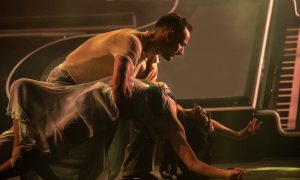
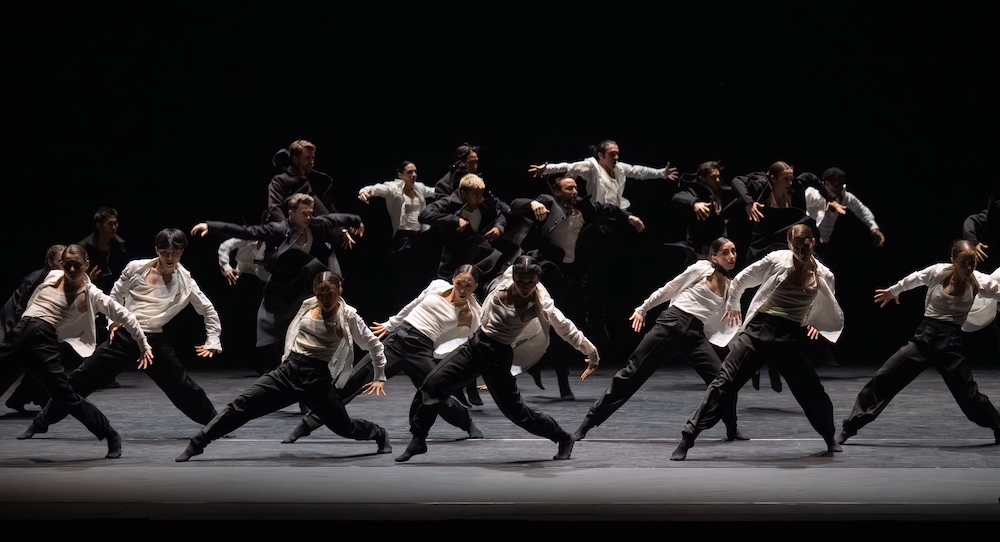
Opening the programme was Body & Soul (Part 1), a work by Crystal Pite, whose choreographic language remains as compelling as ever. Hypnotic from its first moments, the piece unfolded in intricate layers, revealing a tapestry of creative partnerships.
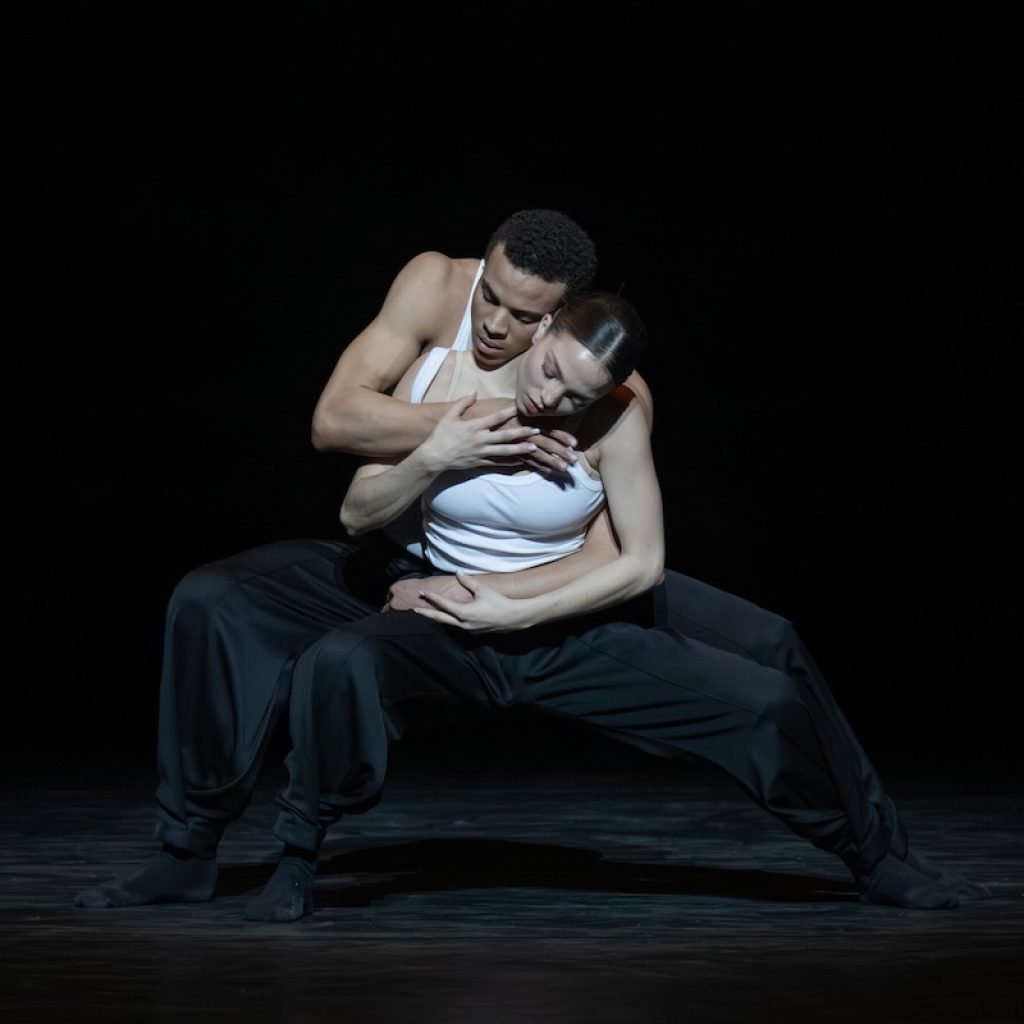
Dressed simply in black pants and white tops, the dancers moved to spoken word and repeated verbal phrases in a foreign language, forming sculptural shapes that ebbed and flowed like waves. Themes of push and pull, conflict and unity emerged, with each phrase seamlessly dissolving into the next. Pite’s gift for crafting collective movement was on full display, with bodies merging, separating and reforming in endlessly inventive ways.
The lighting design played a crucial role, carving out space and depth and casting shifting shadows across the stage. At times, it isolated individuals; at others, it amplified the power of the ensemble. The result was a visually arresting and intellectually engaging work that held the audience in rapt attention, inspired by both the brilliance of the choreography and the technical proficiency of the talented English National Ballet dancers. Moving as one while simultaneously asserting their individuality, they delivered a performance of striking cohesion and nuance.
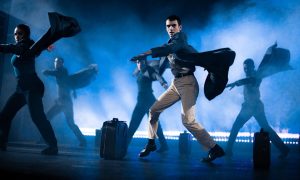
Act 2, Proper Conduct by Kameron N. Saunders, began in striking contrast. The opening ensemble was nothing short of jubilant – joyful, colourful, buoyant and full of light. It felt like stepping into a sun-drenched day, with warmth radiating from both the movement and the stage picture. This effervescent beginning, bursting with delightful dancing and infectious energy, was the highlight of the Body & Soul programme. It was elevated further by the live performance of the English National Ballet Philharmonic, whose playing was rich, textured and transporting. Their presence added a visceral immediacy that made the opening even more exhilarating.
Yet, somewhat disappointingly, this sumptuous live music did not continue beyond the opening section – a missed opportunity, given the depth it brought to the performance.
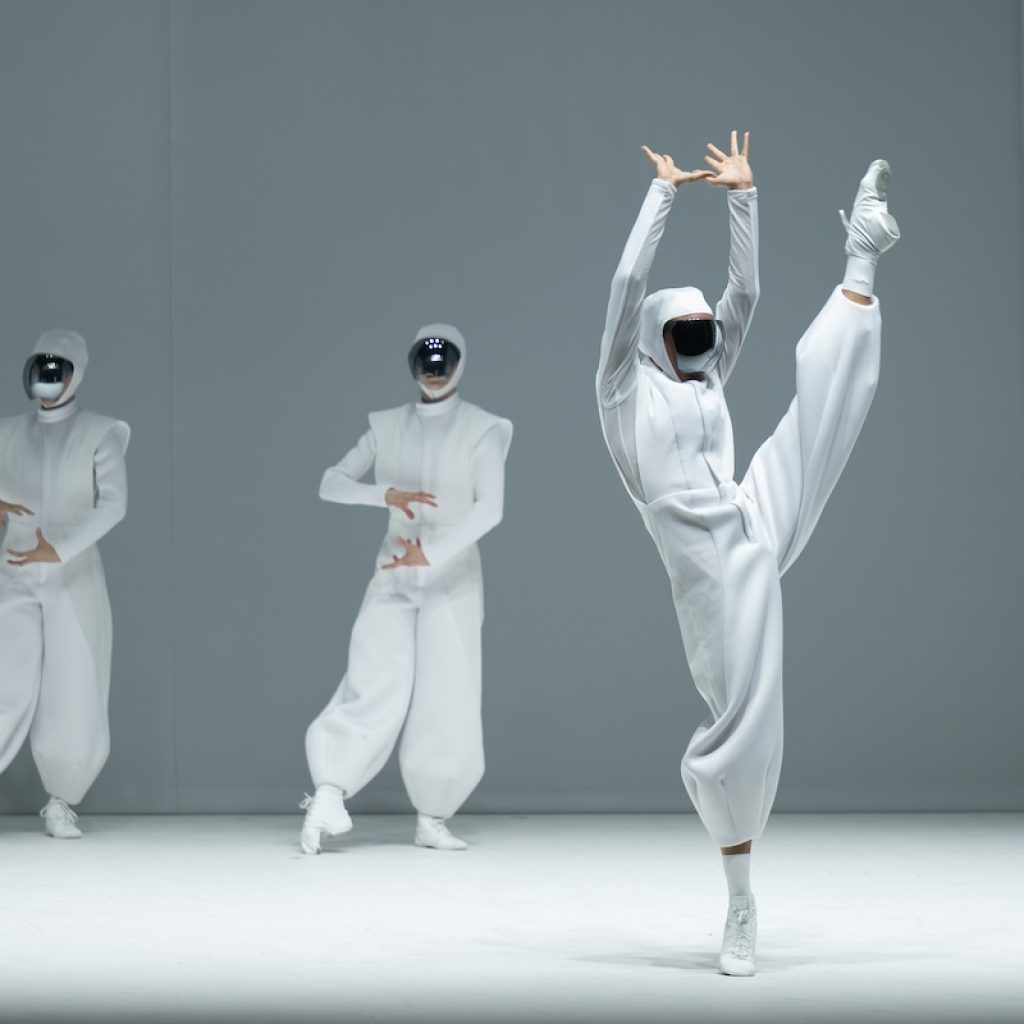
As Proper Conduct progressed, the tonal shift was unmistakable. The brightness of the opening gradually gave way to something darker, more seductive and increasingly strange. Movement evolved from innocent and light to sexualised, gritty and raw, before being replaced by more angular, controlled choreography, as if the performers were governed by unseen forces. The playful humanity of the ensemble began to dissolve, replaced by an unsettling precision, all narrated by a booming, pessimistic voice. By the final section, the vibrant colour and energy of the opening had been stripped away entirely, supplanted by a sterile, almost clinical atmosphere. The dancers, now eerily uniform with their faces masked by silver visors, moved with a robotic quality that felt devoid of individuality.
It was a transformation that lingered. What began as light and life-affirming ended in something cold and unsettling. The closing moments left a profound impression – disturbing, confusing and thought-provoking. One could not help but reflect on the growing influence of artificial intelligence in our world, and the potential erosion of human nuance, spontaneity and soul.
Throughout the programme, the dancers of the English National Ballet demonstrated an exceptionally high standard. Tasked with navigating two markedly contrasting contemporary works, they rose to the challenge with unwavering commitment and dedication. Their technical precision remained impeccable, whether executing Pite’s fluid, interwoven phrasing or embodying the increasingly rigid, stylised movement of Proper Conduct.
By Deborah Searle of Dance Informa.