Sadler’s Wells Theatre, London.
14 October 2026.
Ballet Black are a ballet company like no other. Different and unexpected each year, opening night of Ballet Black at 25 was no exception. This double bill was curated to celebrate the company’s 25th anniversary, and Act I opened with a commissioned piece by Hope Boykin, “….all towards hope.”
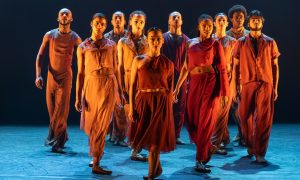
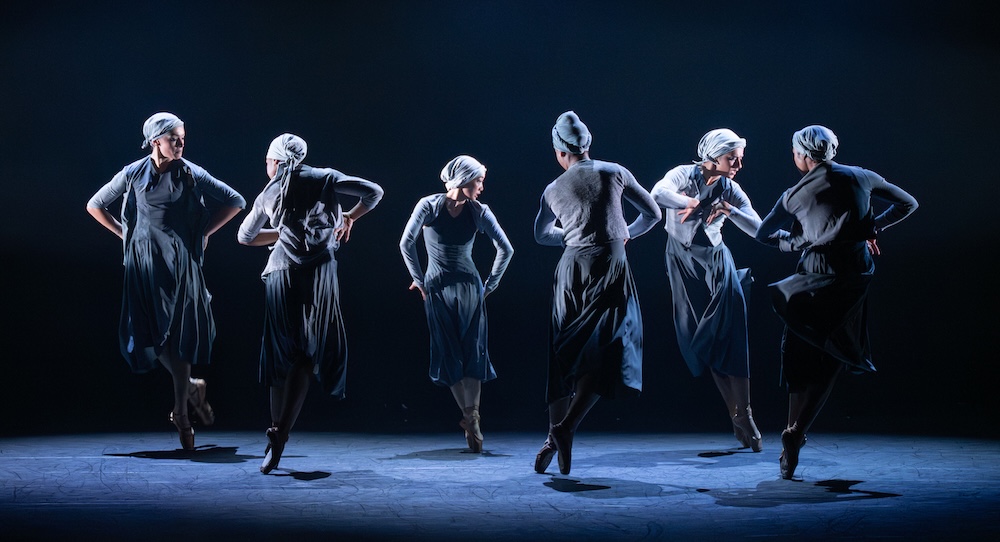
Known for her spoken word as well as choreography, Boykin integrated the two in this quirky piece. Dancers wore loose-fitting earthy-toned costumes – a variety of cut-off tops, trousers, dresses and long trousers in natural oranges, reds, browns, that created a warm ambience on stage along with complimentary lighting, designed by David Plater, that gave the space great depth. A small observation – sometimes the looseness of the costumes obscured line of leg and pointe work.
“We are the change.”
They were a united group from the beginning, an expected assurance to the work very much present, along with strong, almost challenging eyeline. Quite a disjointed piece, not comfortable though quite mesmerising at the same time. Not all of the sections of this piece – punctuated by short blackouts – appeared to belong together, though that may have been the purpose. Wandering piano, a jazzy beat, even silence — a range of soundtracks, score composed by Bill Laurance. Attractive line and shape built — for example, dancers bubbled out of a diagonal line, bursts of free movement that then gathered in a group shape. A lot of lines, moving and then collating together, and much walking and running, both exiting and entering the stage.
“Together we must move.”
There were calm moments – a hand on a shoulder, a long glance. Dancers stood nonchalantly, observing others with curiosity. And the usual glimmer of humour that has come to be expected from this company – here, a male dancer peered out at the audience in silence, his movement unfolding in silence too under a diagonal overhead spotlight. Towards the end, the mood was joyful, relaxed.
“We must move towards hope.”
Quite understated overall for a celebratory piece, though this company of impassioned dancers were a joy to watch as always.
I enjoyed the contrast moving into Act II – a return of Mthuthuzeli November’s 2019 work portraying deep emotions behind the 1946 African miner’s strike in South Africa. Ingoma was absent of violence on stage yet showed us the depth of the results; the opening and particularly the first half of the piece were outstanding, rich in narrative meaning.
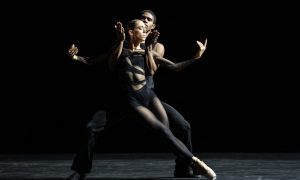
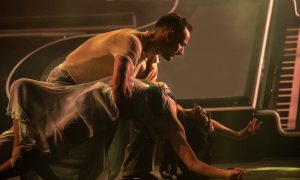
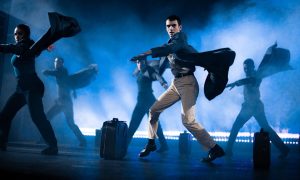
Miners with pickaxes entered in silence, their headtorches shining the way in the darkness. One of them (Ebony Thomas), bare-chested, stood still in an overhead central spotlight. His wife (Isabela Coracy) entered to join him and they knelt in prayer, then stood, moving forehead to forehead. We’re drawn into the unspoken narrative between them – a beautifully emotionally entwined duet. She prepared to say goodbye to him as he put his helmet on and joined fellow miners.
In a stirring sense of anticipation, the miners gathered in tribal song and dance – a version of the Lord’s Prayer sung in Xhosa. It was deeply moving. The repetitive action of their pickaxes as the music built – both powerful and threatening – was very atmospheric. Heavy and urgent drumbeats sounded the attack – we saw men running forward and throwing objects out to the distance; crying could be heard on the soundtrack and fast bourrées on pointe matched the rippling of the strings.
Some excellent lighting choices, including a row of mid-height spotlights across the back of the stage, varying in intensity. As the work continued, narrative not as clear, we could sense the fight and agitation. Dancers moved together as a powerful group. Women fell and were pulled back up again, such a sensation of pain and anguish. To finish, a slow walk to exit the stage, hands to hearts.
Ballet Black’s energy and commitment were palpable, and their emotional responses on stage during bows tangible. An honour to watch dancers so deeply involved and moved by their work.
By Louise Ryrie of Dance Informa.