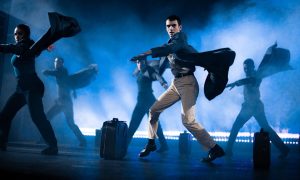
Here, Dance Informa invites Angela Rippon to share her update on the Let’s Dance campaign.
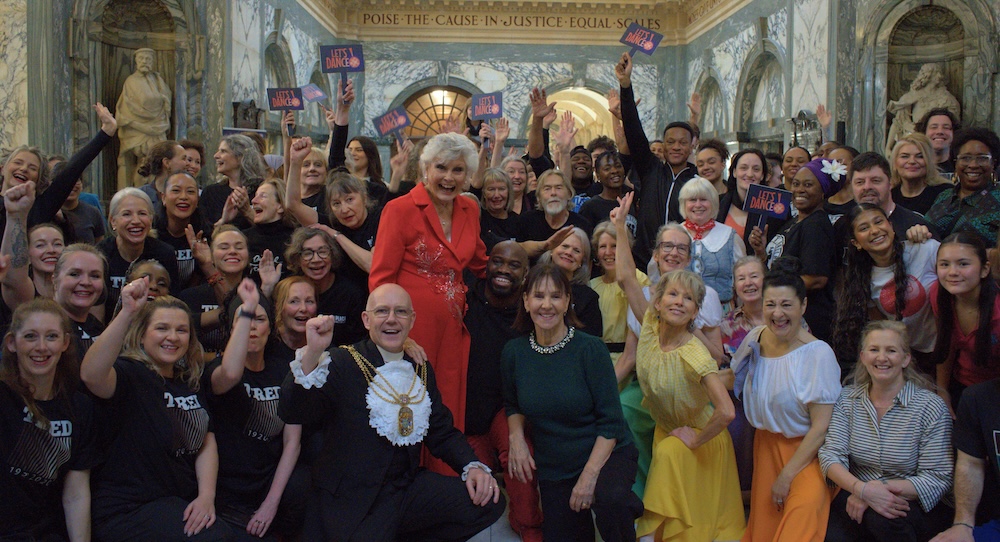
Spring is a time for new beginnings. And for Let’s Dance!, that means planning for the year ahead, as we continue to build on the success of our launch in February in the historic setting of The Old Bailey, and brilliant response to our National Day of Dance on March 8th, when once again thousands of people all over the UK joined in a Let’s Dance class, many of them for the very first time.
One of the most satisfying, and exciting developments over the past year, has been the way in which, with the backing of the NHS, dance is gaining even greater acceptance among clinicians, as a major support in the health and wellbeing of patients who have serious medical conditions. This is undoubtedly something that dance teachers, and some clinicians, have known for some time. Let’s face it, you, as teachers, are at the sharp end of delivering classes for all levels and ages and see at first hand the difference it can make to people’s health and wellbeing in so many different health situations.
Also, many doctors, consultants and, importantly, members of Parliament are already fully committed and totally on side.
But an important challenge here in the UK this year is to demonstrate to the medical profession and decision makers as a whole that dance can be a valuable and powerful tool in their medical kit bag.
And dare I say it – but we are gradually making headway.
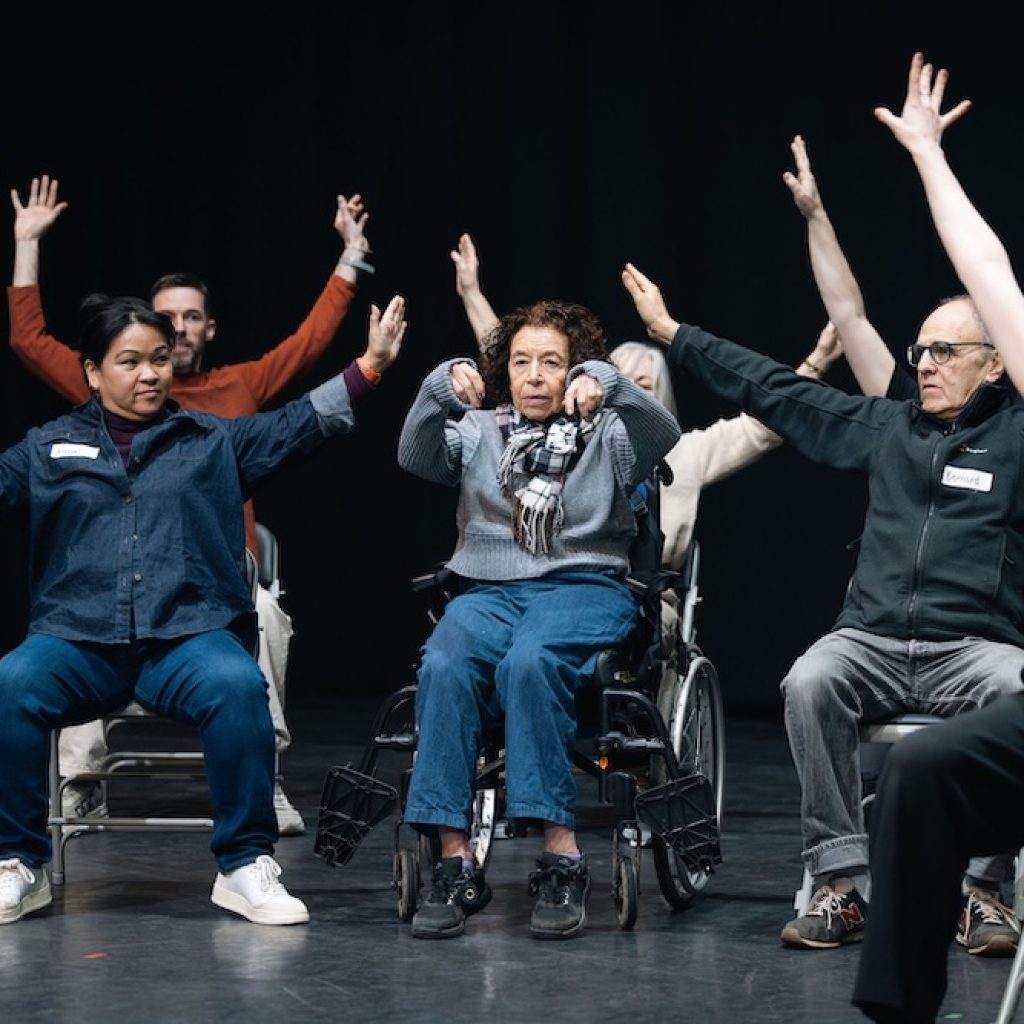
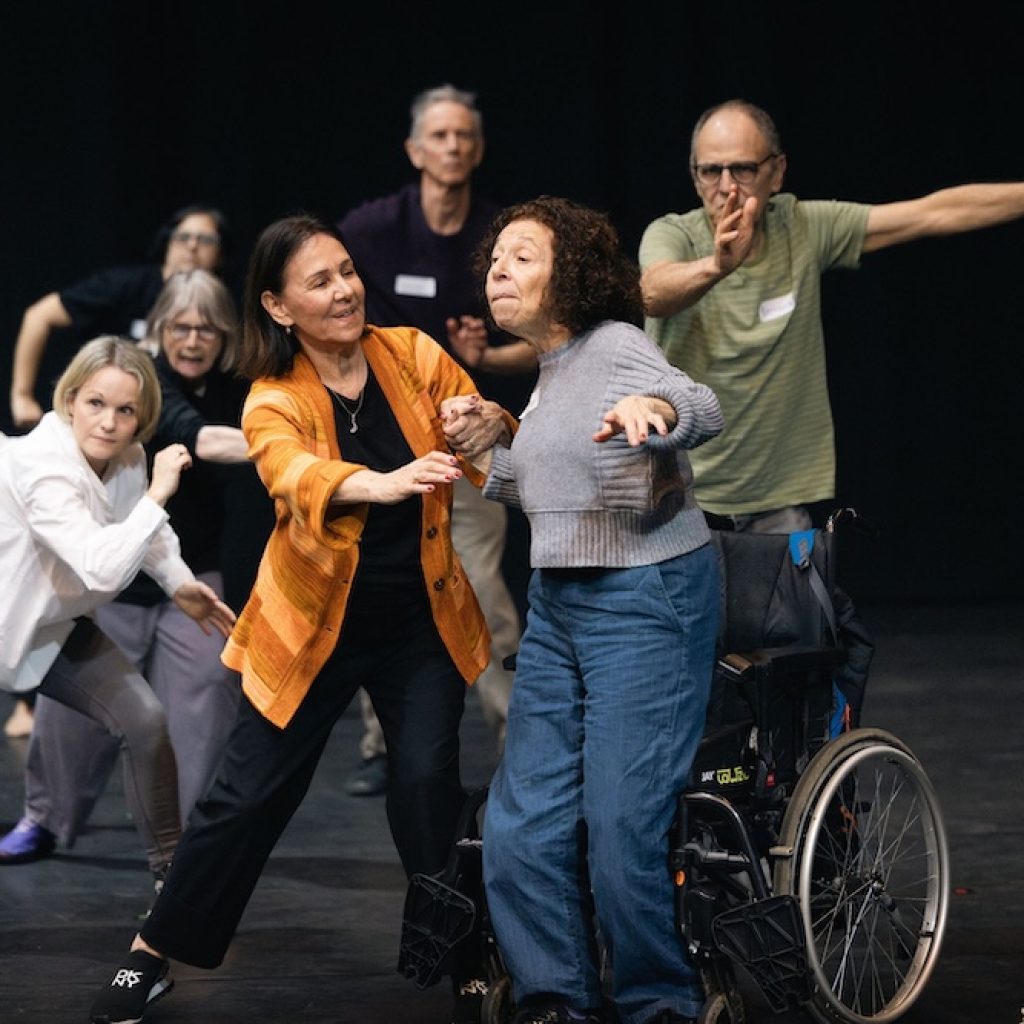
Dance for Parkinson’s is a wonderful example. I know there will be teachers in many parts of the world reading this who regularly take classes for Parkinson’s patients and see the incredible difference it can make to their lives. Caroline Rassell, who is the CEO of Parkinson’s UK, refers to dance as “a miracle,” as it strengthens the core, improves balance and coordination in patients. Many patients feel that dancing gives them back control of their bodies, and the psychological effect of that is incredible.
Here in Britain, for around 15 years, English National Ballet (ENB) has been among the leaders in this field, providing centres and teachers throughout the country that reach around 3,000 people.
But we have over 166,000 people diagnosed with Parkison’s in the country. So, our ambition is to reach as many as possible who could benefit from specialist teaching.
For starters, for our launch in February, the wonderful Dame Arlene Phillips choreographed a routine for the ENB Parkinson’s Dance group, which had its premiere at the launch. There was not a dry eye in the house as 10 dancers performed with grace, skill and passion. Each one demonstrating that they were in control of their bodies – and not Parkinson’s. The brilliant ENB team, under the leadership of Fleur Derbyshire-Fox, have produced a training video of the dance, along with Dame Arlene, which will now be available to teachers all over the country. So hopefully, even more Parkinson’s patients will have a chance to discover the joy of dance, and have their doctors asking them at their regular check-ups, “What have you been doing? You are in great shape.”
To back this up, I had a wonderful opportunity to speak to over 200 doctors, health workers and MPs at the launch in Parliament, of the brilliant initiative to combine the work of the Academy of Social Prescribing with the WHO. It was a great opportunity to remind doctors that instead of always writing an extra pharmaceutical prescription for some patients, they can prescribe a variety of alternative prescriptions – like dance.
So, what a joy it was to speak with a GP who sends his patients with osteoarthritis in their hips and knees to a local dance class, because he knows this will be really beneficial to their condition. And the orthopaedic surgeon who would rather see his potential patients on a dance floor than the operating table before considering surgery.
A few days later, I took part in a podcast with a group of doctors who regularly broadcast to over 30,000 fellow clinicians through their company, Red Whale. The whole programme was devoted entirely to encouraging medical practitioners to recognise the value of dance as a valuable and effective tool in their armoury. And specifically recognising how it would fit into their programme of Social Prescribing.
Finally, the Speaker of our House of Commons, Sir Lindsay Hoyle, gave Let’s Dance the opportunity of delivering a half-hour presentation within the official confines of the Palace of Westminster that demonstrated to our government decision makers the value of dance to the nation’s health. Over 140 MPs came to the presentation, during which I gave them background to the evidence-based research that has been done on the way dance can support the recovery and stability of a whole range of medical issues. Parkinson’s of course. But also mental health, cancer, stroke, recovery from major orthopaedic surgery, arthritis and dementia. I emphasised the savings that could be made on the National Health budget by supporting prevention rather than treatment, and encouraged them all to support the Social Prescribing programme in their individual constituencies.
We finished the presentation with a brief practical demonstration of the power of dance. It was great to see about 40 of those present come on to our improvised dance floor and join my Strictly dance partner Kai Widdrington, along with Dame Arlene, the actor Alex Kingston, and two Strictly professional dancers, for a basic cha-cha-cha lesson. Even for those who just decided to watch, and shimmy on the spot to the music, It was a terrific workout that left everyone fired up for a full and busy day in Parliament. And in no doubt that dance is not just a great entertainment, and a fun and effective way of keeping fit, regardless of age. But also, it’s the best form of exercise for the health and wellbeing of the mind as well as the body. Quite simply, that dance is good medicine.
See below a special note written by Ian, one of the ENB Parkinson’s dancers, after the Let’s Dance launch event. It is a moving and powerful description of what it is like to dance with Parkinson’s.
I have been sitting with yesterday’s extraordinary experience. And wanted to put it into words.
Ten of us. Ten people living every single day with Parkinson’s. Standing on a stage performing a world premiere by the legendary Arlene Phillips. If someone had told me that a few years ago, I’m not sure I would have believed it.
When you live with PD, red letter days are rare. Truly rare. So much of life becomes about managing, coping, adjusting, enduring. But yesterday was not about enduring. It was about living.
As the music began, an enormous wave of adrenaline hit me. It was almost frightening in its intensity. My heart was in my mouth. For a split second I thought — can I do this? And then we were moving. Together. Committed. Present.
“I Wanna Dance with Somebody.”
I have heard that song hundreds of times in my life. But never — never — has it felt so piercingly truthful.
Because let’s be honest. Living with Parkinson’s can be lonely. Living alone with Parkinson’s can be overwhelming. When the night falls, the loneliness does call. There are moments when the blues feel very close indeed.
And yet yesterday, standing beside you, I realised something profound. Dancing with people who understand — who know the daily negotiations with stiffness, fatigue, tremor, fear — is my way of chasing those blues away. It is my way of saying: I am still here.
We communicated something bigger than choreography. We communicated truth. We communicated resilience. We communicated joy that has been fought for. And the response from the audience proved that it landed. So many people came to us and told us we had moved them to tears.
And then, in the most beautiful and human way, we found ourselves in tears, too.
What I felt in that moment was overwhelming. Pride. Relief. Achievement. A sense of honour. We had been entrusted by English National Ballet to represent their extraordinary programme. To represent thousands of people who dance with Parkinson’s across the country. That is no small responsibility.
I cannot describe to you how rarely I feel proud of myself in the grips of Parkinson’s. Yesterday, I did. Deeply. I felt special. And that feeling will stay with me.
To appear live on the BBC, sharing what we do with millions — that felt surreal. But if even one person with Parkinson’s, sitting alone and feeling isolated, saw us and thought, “Maybe I could do that. Maybe I want to dance with somebody,” and reached out to their local group — then our job is done!
With love, admiration, and immense pride,
Ian