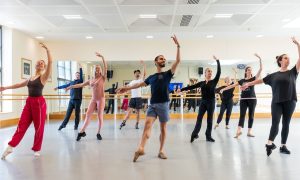
When I was training to teach classical ballet, I have a vivid memory of my teacher telling us that we would become better technical dancers by training as and becoming teachers.
It was perfectly true.
As a young teacher, my own technique excelled as I began to coach others. I found myself growing in strength and the execution of my demonstrations improved radically, particularly noticeable in areas I knew I had weaknesses in. The addition of Pilates teacher training shortly after my classical ballet qualification changed my understanding and use of my own body as well as how I taught, forever.
As the teaching years have gone by, this has meant I have remained aware and vigilant of my changing physique and posture, my awareness stretching naturally to those who taught for me, too – I would always encourage them to come to Pilates classes for themselves, but also for their teaching practice.
However, aging affects everyone — generally, and in specific individual ways, too. For example, I have always chosen to ‘feel the floor’ and have taught in bare feet or socks for nearly 30 years, which has now caused stress fractures in the metatarsal bones. Female teachers approaching menopause and beyond will face hormonal related issues, whether that is general muscle weakening, pelvic floor dysfunction or bone density concerns. All teachers everywhere may notice aching or stiff joints as they age, particularly hips, knees and spine, and the realisation that their body doesn’t allow the same range of movement as it once had.
Of course, as dance teachers, we generally remain more aware than adults in other professions. But, in a busy world where we are always concerned for our dancers’ physiques and techniques, how are you looking after your own body?
“I’m 53 and still keep myself in classes. Introducing weight training for myself two years ago has helped a lot.“
“Teaching is so taxing on your body! I add in strength training and a great physio to help with aches and pains!“
“For me, stress takes its toll on my body.“
“I’m 60 now, but I pay an assistant to jump for me. I demonstrate some seated work. It’s about adapting your body. I take vitamin supplements, and I do Pilates and stretch every day. It helps.“
As a Pilates professional, I want to challenge dance teachers of all genres to look at how they sit and stand when they are teaching. Not how you think you are sitting or standing, but the actual reality. Even if that means filming yourself or asking others for feedback. Be prepared, the answers may not be pleasing!
What might you spot? Rounded shoulders? Stomach muscles not remembering to stay engaged? Weight back in your heels probably signalling sinking into the lower back and hips?
Whilst we should speak to ourselves with love and compassion as we would to somebody else, the more we can ‘catch ourselves out’ with incorrect postural habits, the more we are able to create new more beneficial habits for our aging (whatever our age) teacher-bodies, with the ultimate aim of keeping them going as long as possible!
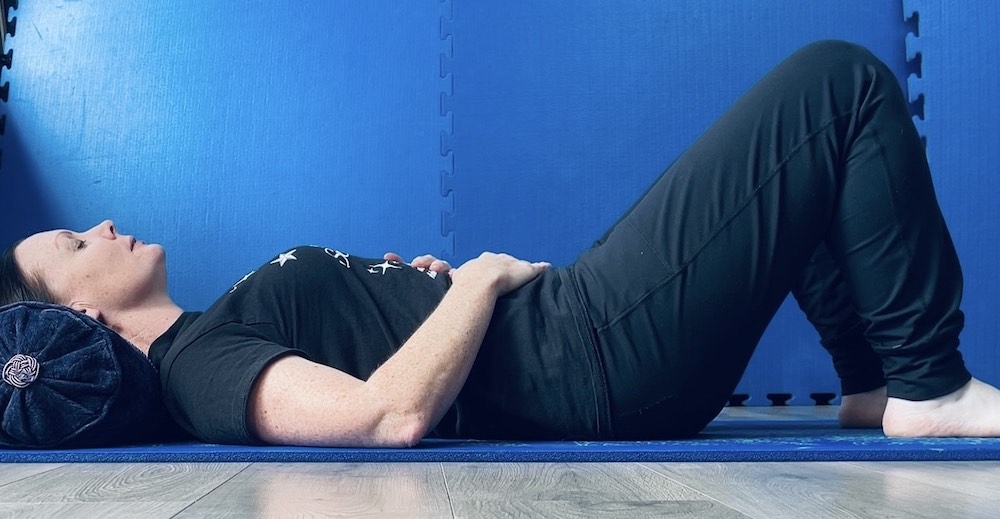
9 Pilates tips to keep you going in and out of the dance studio:
1. Stand up and move around when teaching. It’s so easy to become engrossed in teaching and find that you have been stationary for some time, leading to stiff joints, especially knees and back, and loss of movement ability. Apply Pilates stance principles to your posture as much as you can and walk around the room whilst teaching if possible, maintaining it: Long spine, head floating to ceiling, lifted stomach, weight evenly distributed across toes and heel.
2. Demonstrate with meaning – not necessarily full out, but do what you can do, to the best of your ability. One of the main principles of Pilates is flow of movement; this is all about keeping our range of motion and fluidity alive.
3. Sitting stance. It’s certainly good to take the weight off your feet, particularly if teaching for any length of time. Let’s get it right for our body, though, and sit with both feet flat on the floor, hip distance apart, and encourage the spine to grow up tall away from the seat of the chair.
4. In between each class, twist, turn, reach high, reach low, stretch and yawn. In short – get up and move! Joseph Pilates was very concerned about adults losing their natural childlike ability and desire to move. Read about it in his book, Your Health.
5. When the music is on and your students are dancing, allow yourself to be affected and move to it, too. Tap your foot, or dance with your head; this will look different for each of us depending on your own physical abilities and of course dance genre. You’ll possibly do this naturally anyway, but give yourself permission to let go a little more. Your body is going to thank you!
6. Stand with your back against the wall. This one is great for resetting upper body posture. Arms bent either side of your head in a ‘hands up’ gesture. Now aim for the back of the head, elbows and wrists to touch the wall at the same time, taking care not to arch the back. Tricky? This usually relates to a need for more mobility in the upper back area.
7. Breathe. Another main principle of the Pilates technique. If you’ve trained as a dancer, the likelihood is you’ll naturally be able to lift your stomach muscles in and breathe at the same time. Not to say we can’t improve the quality of this breathing technique called lateral breathing, but the ability to connect to it is a great starting point. Encourage shoulders to widen at the same time as the stomach lifts. Encourage the back to widen as you breathe in. The coordination of the breath and the movement of the body is a great one to work on yourself during teaching – and why not get the students involved as well.
8. Pelvic floor lift. As the pelvic floor muscles make up a third of our core, whether you have pelvic floor issues or not, it’s a great idea to pay attention to this area which statistics prove can suffer greatly if you’re in a job that means you’re on your feet a lot. Aging also plays a big factor in pelvic floor health – for both men and women. Imagine stopping yourself from passing urine (Don’t actually do that for real!), lift in and relax, lift in and relax. You can also do this by imagining you are trying to stop yourself from passing wind.
9. Feet. We expect so much of them and yet often pay little attention to their wellbeing! Rock your weight back and forth toes to heels and back again. Grab a tennis ball or similar and roll underfoot as firmly as you can take the pressure. Practice rises on two legs and one; walk around on tiptoes and again on your heels. Pop little changes into your days for big improvements.
Look after yourself, teachers!
By Louise Ryrie of Dance Informa.