Sadler’s Wells Theatre, London.
30 July 2026.
Matthew Bourne’s ‘The Car Man’ is unbelievably impressive, outstanding theatrical entertainment. Even when it’s over, part of your brain stays there, reliving it. Don’t look away – you’ll miss something; inspiring choreography, packed with innovative lifts, turns, sweet gestures and flamboyant flair.
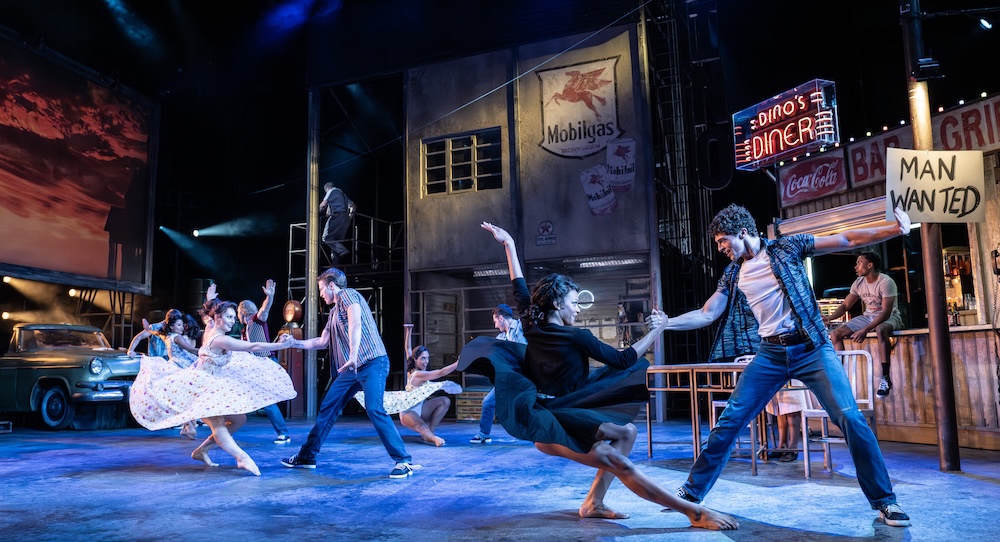
I loved the open working stage on entering the auditorium. Strains of Georges Bizet’s music in the background, a Grease-like vibe, with men in vests – plus a female mechanic – working on two cars, initially over to stage right. The cars (front halves of original 1950s American cars) are on wheels and are moved around the stage by dancers setting different scenes.
A ’Man Wanted’ sign introduced us to one of the main storylines in the show. Luca – danced tonight by Harrison Dowzell, arrived in Harmony and stirred up all the locals as he became that wanted man! Entering the stage and turning heads immediately, there’s an explosive launch into a bold and punchy dance in the garage, tyres roll, cars are repositioned, with movements all echoing Bizet’s catchy flamenco rhythms. Dancers were vocal – catcalling and cheering, cartwheeling across the cars.
The bell rang for the end of work, and the audience enjoyed a fabulously comical unfolding scene as the men made their way upstairs – the two-floored structure at the back of the stage served as the garage office, and later the prison. They stripped off completely behind a strategically placed opaque panel and showered before joining their women who sashayed in 1950s flowy dresses and bare feet in the bar area, stage left. So much personality, and so much connection and rapport between partners which heightened the audience’s enjoyment, too.
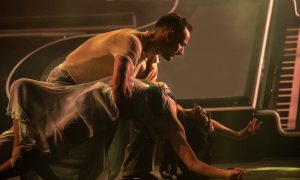
There’s a huge billboard downstage to begin, which lit up with ‘Welcome to Harmony’ at the start, in the style of a movie opening. The billboard was then moved back for the duration, though from its size and prominence, it looked as though it was going to be utilised a lot more. I loved the clever percussive section, giving rattlesnake vibes and illustrated by dancers’ foot-stamping, heavy swinging motions and dropping to the floor. There were also atmospheric moments of silence, such as when Luca polished the car and Lana kneaded dough. To the beat of a castanet he came up behind her and their ferociously raunchy duet to Bizet’s “Habanera” began.
Powerfully charismatic Dowzell as Luca, played opposite Cordelia Braithwaite as Lana and her seductively gorgeous extensions. Both showed great character development, from their first eye-lock and obvious self-centred personalities. They locked eyes again later, as they both realised what the other was capable of, and as Act II developed, we saw Luca leaning towards his conscience and Lana towards saving her own skin.
The warm lighting added summery heat and ambience, as did the weighty freedom of the dancing. Dancers partnered up in ballroom-style duets with flamenco elements – suggestive, with hips and flirtatious eyes. Danny Reubens as leering garage owner Dino excelled, particularly so later on, lumbering blood-splattered into the dancing scene as Luca’s haunted vision, after being killed. Skilful choreography and communication throughout; Bourne showed us time and again, such exceptional ability in layering the stage with mini-subplots and nuances to feast on. Humour as always bubbled alongside serious subjects; Luca planted a cheeky kiss on Angelo’s lips, after stealing his girlfriend Rita away. And a moment where both Lana and Angelo came to the front of the stage, each dreamily besotted by Luca.
Angelo, played by Leonardo McCorkindale, and Rita – Kurumi Kamayachi – brought a light sense of innocence to the work. They were both dressed in white/light-coloured clothing; their sweetness in their mutual attraction endearing, but their blossoming relationship also infiltrated by the ugliness of the main plot.
I abhor any depiction of violence and would have left for the foyer if the lengthy fight scene leading to the culmination of the show had been a film. But seeing past the violence, the incredibly detailed fight choreography was very realistic and atmospheric, and the degradation and humiliation of Angelo by the prison guard disturbing and upsetting as intended. The prison scene was cleverly presented using the two-tiered staging, and McCorkindale gave a heart-rending tortured solo as Angelo.
As impressive as the narrative was, and its deeply dramatic staging, there’s no denying that the musical score played live and orchestrated by Terry Davis and Rodion Shchedrin, after Bizet, absolutely made this production.
A rightfully quiet and humble ending, highlighting the futility of fighting and its resulting death brought a sombre cast assembled loosely in twos and threes across the front of the stage. A thoroughly happy audience gave a standing ovation to a fantastic evening that after all its racing twists and turns, could only have ended in tragedy!
By Louise Ryrie of Dance Informa.