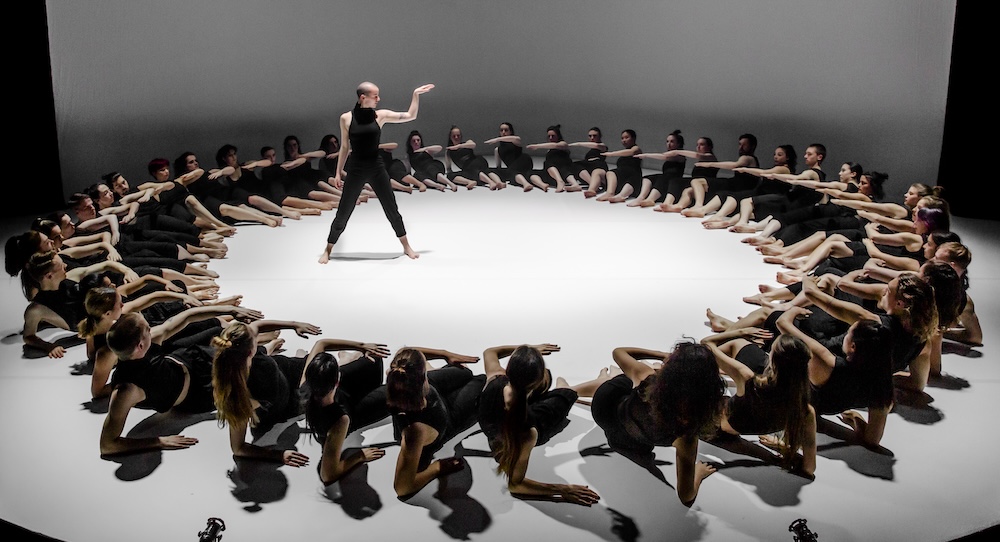
This summer, Southbank Centre welcomes the hotly anticipated UK debut of COLUSSUS, from Stephanie Lake Company. One of Australia’s most prolific and celebrated dance companies, it is renowned for its gutsy choreography and striking aesthetic. COLOSSUS, a monumental work that sees 60 dancers move as one, has captivated audiences around the world, and now arrives in London for the first time.
As this major new production lands in the capital, we sit down with rehearsal director Sarah McCrorie, whose journey through one of contemporary dance’s most ambitious works offers a window into the craft behind the stage.
McCrorie started full-time training at the Victorian College of the Arts Secondary School and later completed three years of tertiary training at Transit Dance (both in Melbourne Australia), where she first encountered Stephanie Lake’s work, which would go on to define much of her career.
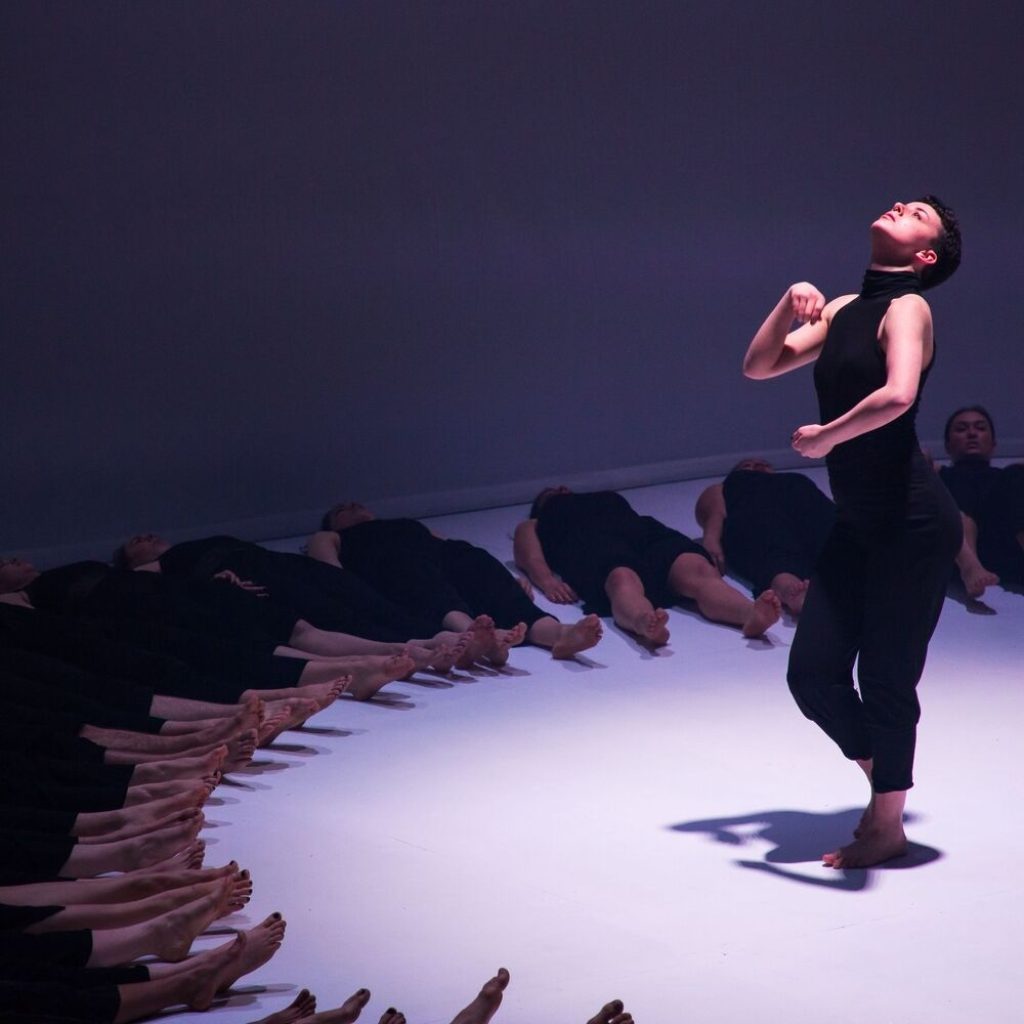
Since graduating, McCrorie has spent seven years touring and working on COLOSSUS, while also contributing to other major projects with Stephanie Lake Company, including Multiply (2020) and Mass Movement at the Adelaide Festival. Alongside this, she has collaborated with independent choreographers such as Lina Limosani and Kayla Douglas. As rehearsal director, McCrorie is responsible for maintaining the integrity of a work while allowing it to evolve across casts, cultures, and stages.
COLOSSUS features 60 dancers! What are the biggest challenges in rehearsing a work at this scale?
“One of the biggest challenges is getting to know all 60 dancers in such a short amount of time. Nikky (Muscat, Rehearsal Director) and I really prioritise building connections in the room early on, so that each dancer feels seen and supported. With such a large group, we’re constantly observing and finding ways to understand how each individual moves and works.
Casting the duet and soloist roles within a tight rehearsal period can also be challenging, especially when all the dancers are new to us. We’re often making quick decisions based on what we see in the room, while also thinking about the overall cohesion of the work.
There’s also the logistical challenge of maintaining clarity, spacing, and energy across such a large cast. But when it all comes together, that scale is what makes the piece so powerful.”
What does a typical rehearsal day look like?
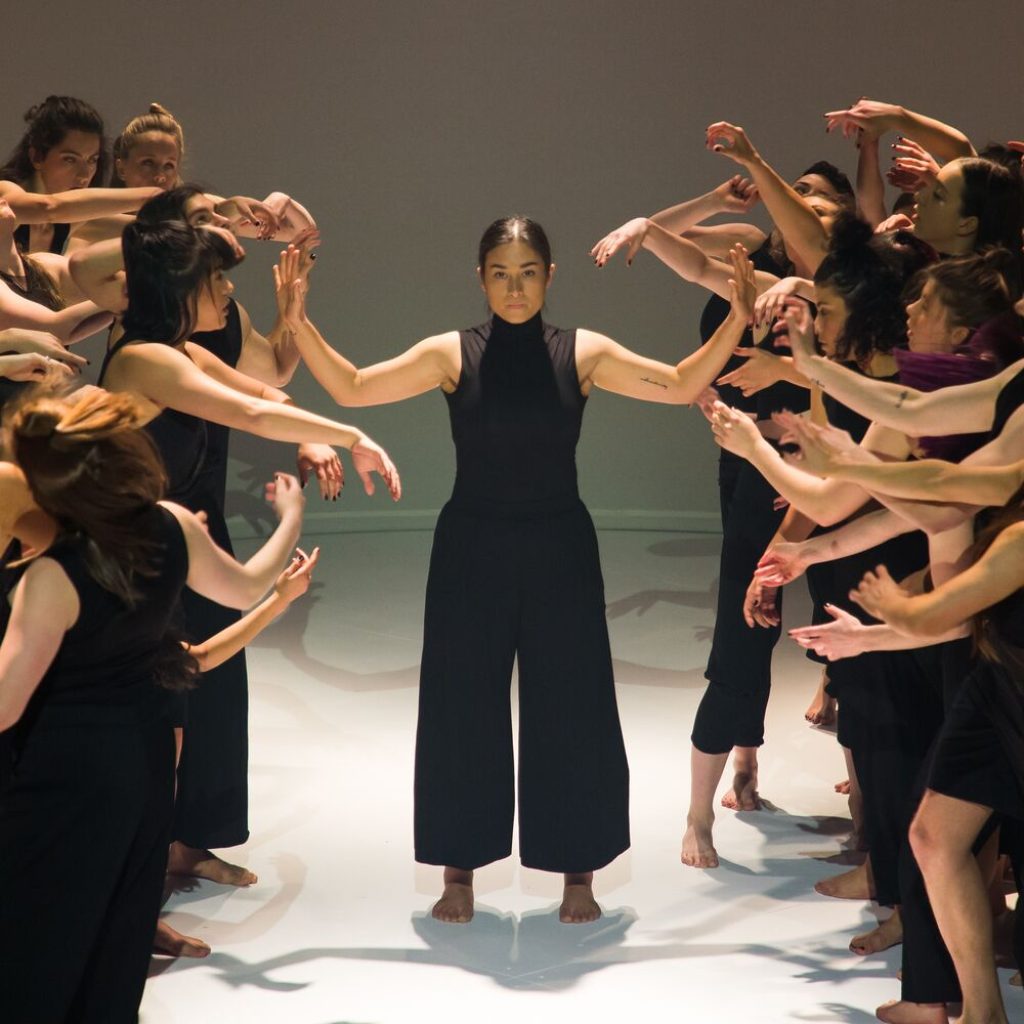
“We usually follow a consistent structure throughout the rehearsal period. The day begins with a warm-up, often incorporating improvisation tasks related to the work, which helps prepare the dancers and gives us insight into how they move individually.
From there, we split the day between learning and rehearsing different sections of COLOSSUS, gradually building the work.”
How closely do you work with Stephanie during rehearsals, and how much interpretive freedom do you have as a rehearsal director?
“In the early touring stages, we worked very closely with Stephanie, who was often present in rehearsals. As the work has evolved and our experience has grown, we’ve been given more autonomy.
That said, we’re always in regular communication with Stephanie throughout the rehearsal period. As we are always travelling, being in different time zones can make this challenging at times, but we stay closely connected to ensure the integrity of the work.”
This marks a UK debut for the show. Have there been any cultural or stylistic adaptations? How do you anticipate rehearsing at the Southbank Centre will shape the work compared to other venues?
“We’re yet to begin rehearsals for this season, but COLOSSUS has now been performed by over 850 dancers worldwide, and each iteration brings its own unique character. Working with dancers from different backgrounds always introduces new textures, perspectives, and energy to the piece, which keeps it constantly evolving.
In terms of rehearsing at the Southbank Centre, each venue inevitably shapes the work in subtle ways from the scale of the space to the atmosphere of the theatre, which influences the overall experience for both the dancers and the audience.”
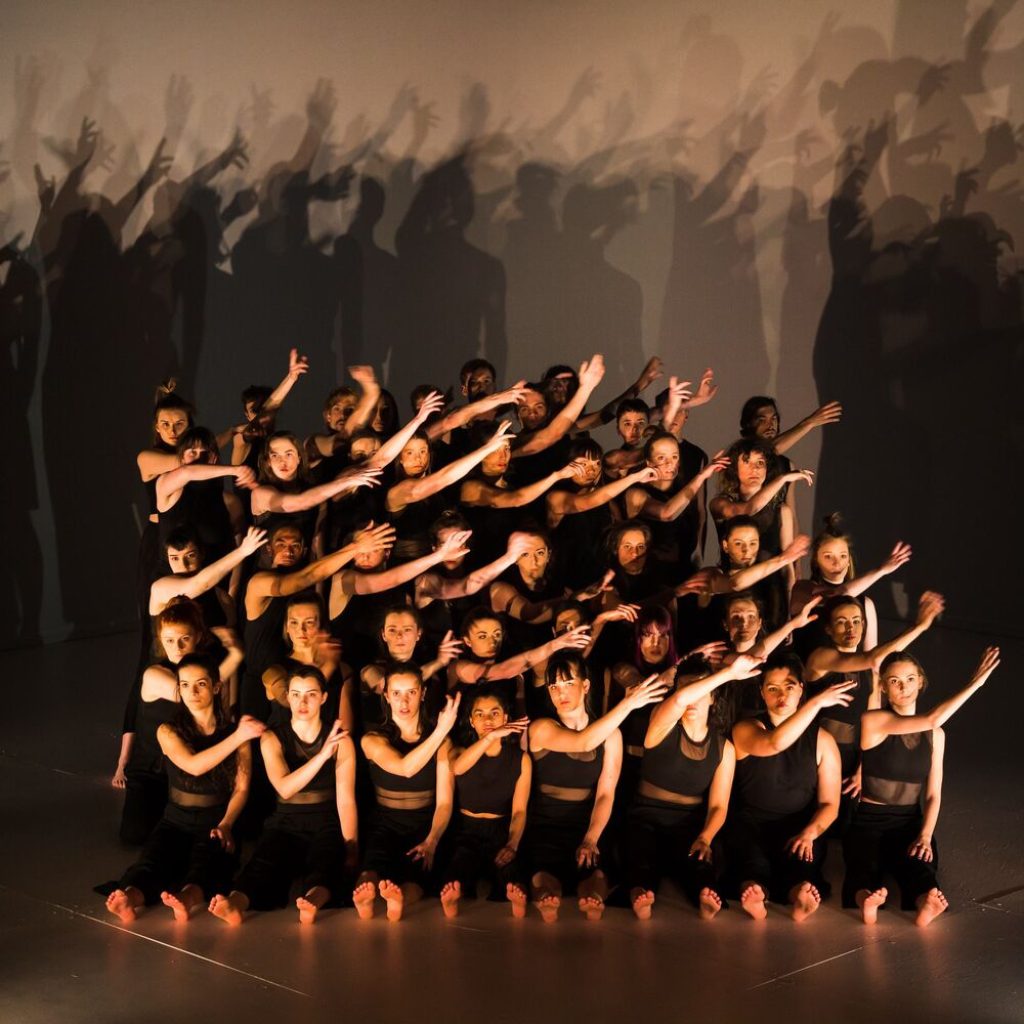
The piece begins ‘from darkness’ and builds into a ‘pulsating mass.’ How do lighting, sound, and spatial design factor into rehearsals?
“The work has a very clear structure in terms of lighting, sound, and spatial design, so these elements are embedded from the very beginning. As soon as we start teaching the material, we’re already considering spacing and musical timing.
We introduce these elements early in the rehearsal process so dancers have as much time as possible to become familiar with how everything integrates.”
What has been the most rewarding moment for you as a rehearsal director on this project?
“My own evolution alongside this project over the past seven years has been incredibly meaningful. This work is very close to my heart. Just before the first season, I broke my foot and was unable to perform, which was a difficult moment in my early career. Fortunately, the work returned for the Melbourne International Arts Festival in 2019, and I was able to perform then.
To later step into the role of rehearsal director felt incredibly humbling. I’ve experienced COLOSSUS from so many perspectives: as part of the creation, as a performer, and now as someone teaching and re-staging the work. It has shaped not only my career, but my life.
Sharing this piece with hundreds of dancers and audiences around the world, and meeting so many incredible people along the way, has been an absolute joy.”
If you could describe COLOSSUS from your perspective in the rehearsal room, what would they be and why?
“Vibrant, relentless, and deeply human, because of the constant energy in the room, the scale of the work, and the individuality each dancer brings to the collective.”
COLOSSUS will come to London in June 2026, as part of the Southbank Centre’s 75th anniversary programme. For tickets and more information, visit southbankcentre.co.uk/whats-on/colossus.
By Allie D’Almo of Dance Informa.