Dancers have been personalising their footwear for centuries. As far back as the Baroque courts, shoes were adorned with ribbons, rosettes, jewels, and decorative buckles, each detail helping performers stand out under candlelit stages. Coloured fabrics were also used to coordinate footwear with costumes, enhancing both style and storytelling. Today, that same instinct for customisation remains, although the materials and methods have evolved. In the 21st century, dancers can choose from millions of vibrant shades, including a wide range of flesh tones designed to create a seamless line from leg to foot. Dyeing is no longer just a cosmetic choice; it contributes to uniformity, supports choreographic vision, and can revive worn shoes so they look performance-ready once again.
Dancers in major companies benefit from professional costume shops, where costumers ensure colours are matched precisely to the choreographer’s specifications. For students and freelance dancers, however, adapting existing shoes rather than purchasing custom orders can save both time and money. Fortunately, with the right materials, patience, and care, it is entirely possible to achieve professional results at home or in the studio.
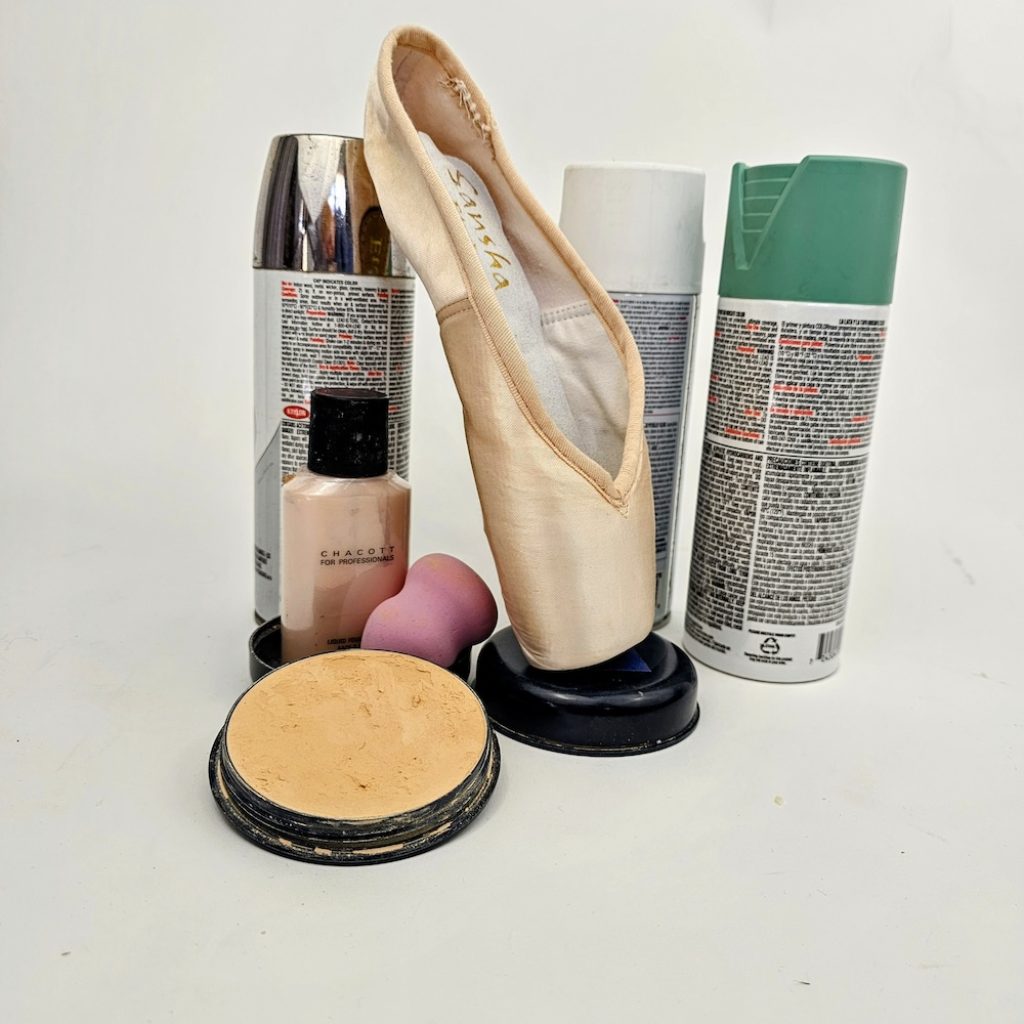
Before beginning any dyeing process, consider how the finished footwear will look on stage. A perfectly matched colour in natural light may appear completely different under warm amber side-light or cool blue washes. If possible, ask a member of the technical team about the lighting palette used in your production. Dancers aiming to match a skin tone should also check how the dye looks against their leg under different lighting conditions. A seamless theatrical appearance sometimes requires a little trial and error.
Traditional methods such as tea dye, pancake make-up, or hand-mixed custom dyes have been used reliably for decades. Tea can gently age satin, while carefully mixed dyes allow dancers to create a personalised stage tone. Many performers use liquid or pancake make-up to match their shoe colour to their individual skin tone. These methods can create an exceptionally smooth and flattering line, though they work best on satin and canvas rather than leather or synthetic materials. They can also carry a risk of colour transferring to the stage floor, particularly white Marley. Caution is advised.
When using pancake make-up, avoid damp or humid rooms, which may prevent shoes from drying properly and can weaken the glue in pointe shoes. If working with brand-new shoes, it is usually easier to dye the ribbons and elastics while they are attached, rather than colouring them separately and then attempting to sew through stiffened fibres. Prepare your workspace with an old towel, and stuff the shoes with newspaper or brown paper to help them keep their shape. If using pancake make-up, moisten a sponge but avoid excessive liquid, which can warp the shoe or soften its structure. Always test your colour mixture on a small, hidden area first; this simple step prevents costly mistakes later. If satisfied, build the colour in thin layers and allow the shoes to dry completely for up to 24 hours.
For those seeking more modern or convenient solutions, water-based spray paints offer a fast alternative. Liquitex Professional Spray Paint, widely available in the UK and online, comes in dozens of colours and has low odour. As always, work in a well-ventilated area and protect your surface with a tarp or towel. Stuff the shoes, mask any areas you do not wish to colour by applying painter’s tape. Test a small section first, and hold the can several inches from the shoe while spraying. A light, even coat is usually sufficient, and the shoes can dry within an hour. Always test the finished spray on a small portion of your flooring to ensure that it does not transfer.
Dancers sensitive to fumes may prefer Pointe People’s Pointe Paint, which works on satin and canvas and is available both online and in UK dance shops. These water-based dyes do not crack, shrink, or transfer to tights or marley. They dry in approximately 30 minutes, and the sponge applicator makes them easy to apply without gloves, drop cloths, or special ventilation. The colours include aqua, orchid, marigold, turmeric, coral, sunshine, and an eye-catching Victoria Paige Red, inspired by The Red Shoes. Pointe People also offers a separate line for leather footwear in eight shades, as well as seven skin-tone options. Free skin-tone sample swatches can be requested to ensure the best match.
To use Pointe Paint, ensure the shoes are clean and free of rosin or dirt. Shake the bottle thoroughly, remove the cap, and use their recommended “dab, dab, slide” method: press the sponge to deposit colour, then glide it across the satin for an even layer. Most shades dry within 20-40 minutes, though heavily worn shoes may absorb the dye unevenly and require an additional coat.
Modern synthetics – neoprene, mesh, knit, spandex, polyester blends – are the most challenging materials to dye at home. These fabrics require specialised synthetic dyes such as Rit DyeMore and must first be washed in warm, soapy water to remove finishes that interfere with dye absorption. Keep in mind that not all dance footwear synthetic fabrics tolerate near-boiling water. Some neoprene blends can warp or delaminate. Because water and dance footwear rarely mix well, these methods should be attempted only when necessary.
If you absolutely have to dye synthetic-blend shoes with Rit DyeMore, the stovetop method is essential. You may wish to purchase slightly larger shoes to accommodate potential shrinkage in blended fibres. Use a thermometer and heat the water to roughly 93°C, add a teaspoon of dish soap, and stir in the dye. Dampen the shoes before submerging them and keep the pot at a steady simmer, stirring gently throughout. Depending on the desired intensity, the process may take from 10 to 30 minutes. Rinse the shoes in warm water and gradually transition to cool water until the water runs clear. Always test a sample first to ensure that flexibility and stretch are not compromised.
There are several important points to bear in mind with any dyeing method. Oversaturating a shoe – whether with dye, water, or makeup – can soften the glue or distort the box, particularly in pointe shoes. Using the wrong product for the material is a common mistake: leather, satin, canvas, and synthetics all require different approaches. Skipping the colour test is tempting but often disastrous, and rushing the drying process can lead to mushy, misshapen shoes and an unpleasant surprise on stage. Whenever possible, avoid dyeing shoes too close to a performance; allow at least 24-48 hours for them to dry and air properly.
Dyed shoes will inevitably fade over time, so expect occasional touch-ups. Store freshly dyed footwear separately from costumes and other shoes to prevent accidental transfer. Many dancers designate one pair for performance and another for rehearsal to keep their stage shoes pristine.
Dyeing dance footwear remains a cherished theatrical ritual, blending artistry with practicality. Whether you are matching a choreographer’s exact specifications or simply reviving a favourite pair, the process allows dancers to express individuality while maintaining the polished line that ballet and contemporary work demand. With care, the right materials, and a steady hand, even the most ordinary shoe can become a work of art.
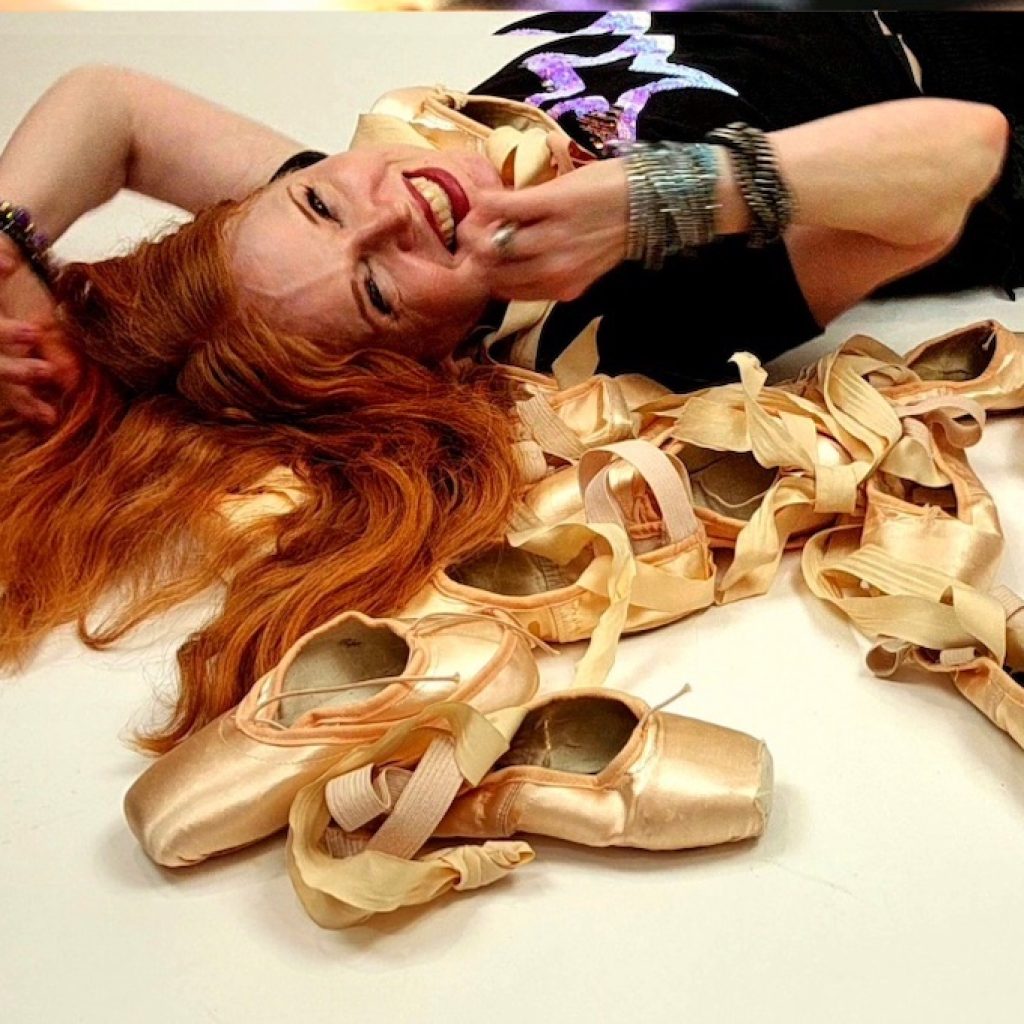
By Mary Carpenter of Dancewithmary NYC.
Mary Carpenter is a former professional ballet dancer who began her studies at CCM, the official school for the Cincinnati Ballet Company, and was on scholarship at the David Howard Dance Center. Mary also holds a BA with high honors in dance from Butler University. She has danced for the Metropolitan Opera Ballet, Ohio Dance Theatre, Granite State Ballet, Maryland Ballet, Lexington Ballet and Charleston Ballet, and performed in numerous off-Broadway shows. Mary has contributed to the dance community as a dedicated instructor in ballet, Pilates and Progressing Ballet Technique (PBT), and served on the faculty of Broadway Dance Center, the Ballet Hispánico School of Dance, Barnard College and The New School University. She is current faculty for Ballet Academy East and the world-famous Steps on Broadway. Her classes for adult beginners are available virtually on the Dancio.com website. With over three decades of experience, Mary has become a highly skilled pointe shoe fitter. She has worked with dancers from prestigious companies such as American Ballet Theatre (ABT), The Royal Ballet and New York City Ballet. Her expertise in fitting pointe shoes has led her to give lectures at renowned summer programs, including ABT/JKO, Dance Theatre of Harlem, NYSSSA and Oklahoma Summer Arts in Quartz. In 2015, Mary launched her YouTube channel, “Dancewithmary NYC,” where she shares her knowledge and expertise on pointe shoes through monthly segments. Her channel has become a valuable resource for dancers and teachers seeking guidance and advice.