Royal Opera House, London.
20 March 2026.
On Friday, March 20, The Royal Ballet presented a deeply moving and stylistically faithful performance of Giselle at the exquisite Royal Opera House – an evening that quietly shimmered with integrity, artistry and a sense of legacy. This was not simply a night at the ballet, but an experience that reminded us why these great traditional works continue to speak so powerfully across generations.
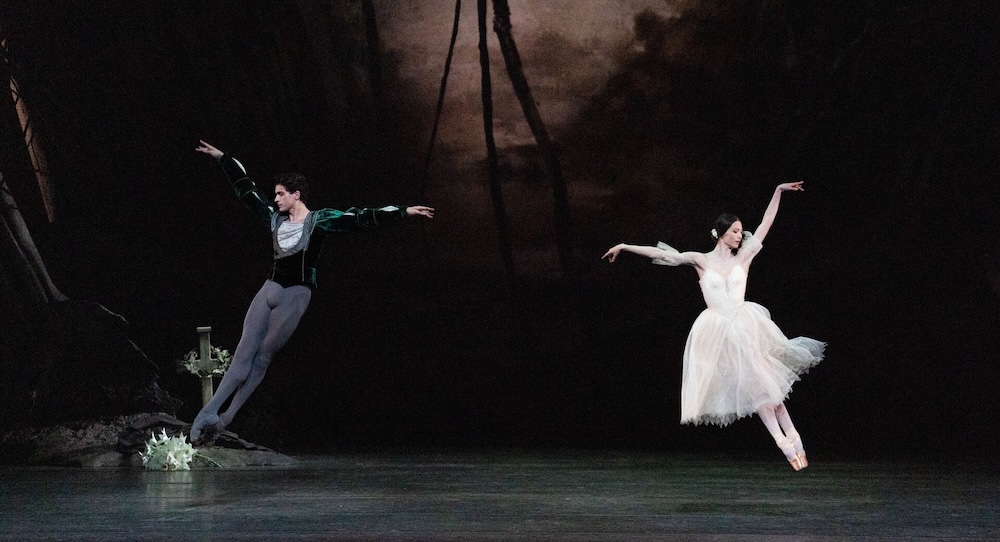
Stunning guest artist Hannah O’Neill, a principal dancer of the Paris Opera Ballet, brought a luminous delicacy to the title role. Her Giselle felt deeply considered and sincerely felt. Her portrayal was never overstated and always authentic. In Act I, there was a lightness, an almost childlike joy in her dancing, with her footwork soft and buoyant. As the drama unfolded, O’Neill’s mad scene was particularly affecting; rather than leaning into theatrical excess, she allowed the tragedy to bloom from within, resulting in a portrayal that was both intimate and devastating. By Act II, she seemed to transcend the earthly realm entirely, her movement weightless, with an almost spiritual quality that drew the audience into her world.
Opposite her, Royal Ballet principal Reece Clarke delivered a refined and quietly powerful Albrecht. His long lines and noble presence suited the role well, and there was a thoughtful restraint in his acting that made his remorse feel genuine rather than performative. In Act II, Clark truly captivated. Clark’s partnering remained attentive and deeply respectful, allowing O’Neill the space to appear truly otherworldly. His solo displayed remarkable stamina, each phrase sustained with control and clarity, his ballon seemingly defying gravity as he hovered effortlessly through the air. The precision of his repeated batterie was exhilarating, executed with such crispness and height that it elicited an almost childlike delight from the audience. Indeed, the joy was infectious; later, outside the theatre, one could spot a few audience members attempting their own playful batterie while waiting for taxis, laughter echoing into the streets of Covent Garden.
As Hilarion, Téo Dubreuil offered a sincere and grounded interpretation. His portrayal presenting a man driven by honest emotion. This made his ultimate sad fate at the hands of the Wilis all the more poignant, and his presence added an important emotional anchor to the unfolding drama.
A particularly striking aspect of the evening was the evocative lighting design. Originally conceived by Jennifer Tipton and sensitively recreated by David Finn, the lighting became a character in its own right. The Wilis scenes in Act II were especially breathtaking – bathed in a cool, silvery luminescence that seemed to suspend time and space. The dancers emerged like apparitions, their forms sculpted by shadow and moon light, enhancing the eerie beauty and quiet menace of the scene.
This production of Giselle carried special significance with Sir Peter Wright present during rehearsals. What a treat for the dancers! His influence could be felt in every detail. One had the impression that this was not merely a revival, but a living, breathing continuation of Wright’s vision – carefully preserved, yet still full of life.
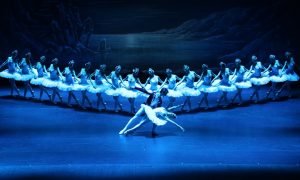
The corps de ballet, particularly as the Wilis, were divine. Their unity, musicality and quiet intensity created a powerful collective presence, that was both beautiful and formidable.
In the end, this Giselle felt like a gentle reminder of ballet’s enduring magic. With thoughtful performances, exquisite design, and a deep respect for tradition, The Royal Ballet offered an evening that was not only artistically satisfying but genuinely moving.
By Deborah Searle of Dance Informa.