Carmen is pretty famous as the 19th century four-act opera, by George Bizet, frequently produced by operatic companies worldwide since its original creation in 1875.
Set in Seville, Spain, the lengthy and complex story follows Carmen – a fiery gypsy character who men are magnetically drawn to. Don José is not initially, but is later seduced by her charms, deserting his sweetheart Micaela, but then is abandoned himself when Carmen turns her attention to the bullfighter Escamillo.

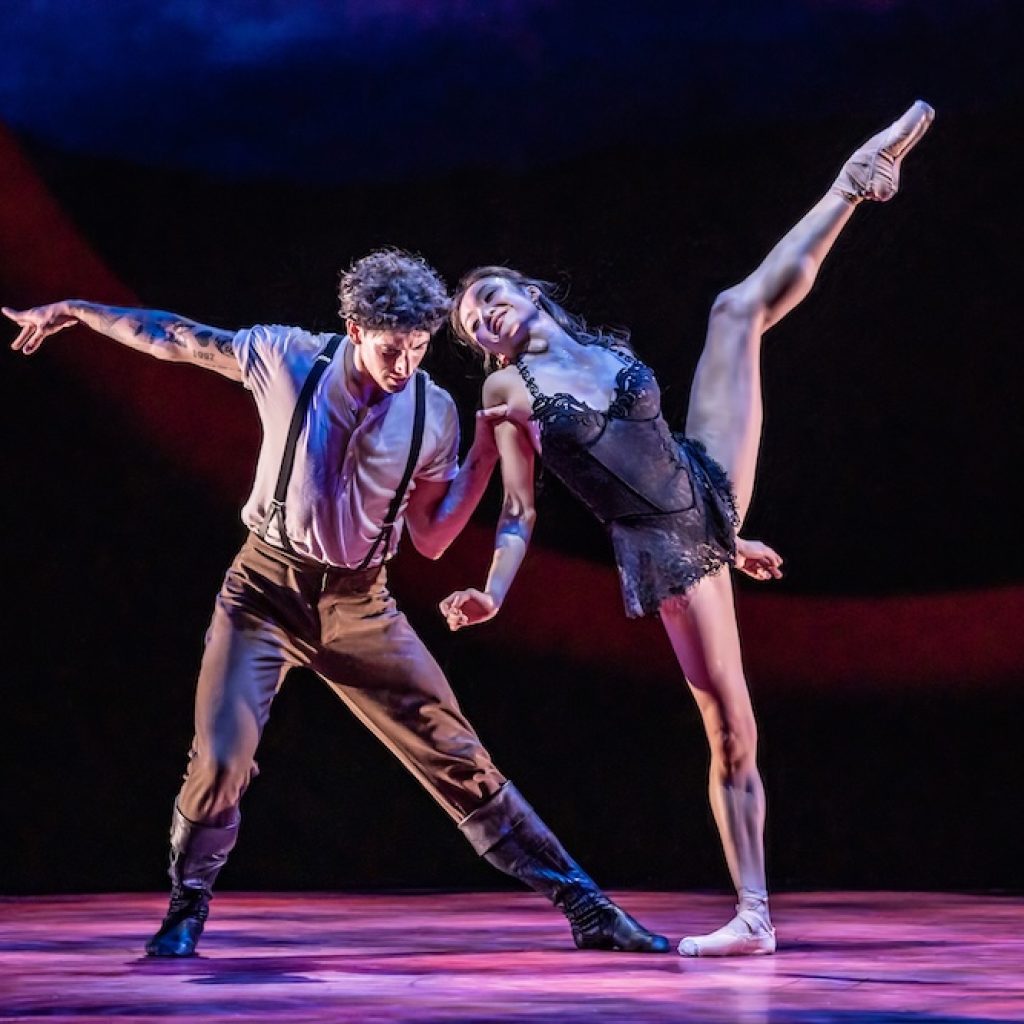
Acosta Danza, Carlos Acosta’s dance company, which celebrated its 10-year anniversary in 2025, has taken those passionate themes and the storyline of Carmen and reimagined it as a ballet, accompanied by Bizet’s stirring and instantly recognisable music – with 1967 musical rearrangements by Rodion Shchedrin.
“I had the pleasure of being reunited with the original creative team of Tim Hatley and Peter Mumford, as well as being joined by Nina Dunn who has augmented the production value of the work by introducing some really amazing visual projections,” Acosta says.
First produced by Acosta in 2024, Carmen’s passionate story contains some very strong emotions that audiences may easily resonate with. Joy and anger, jealousy and passion all thread their way through the narrative which has a twist ending, when overcome by his jealousy, Don José kills Carmen. Artistically, it sounds such an exciting challenge, with more and more companies taking historical stories, novels, films and recreating them as ballets.
To point to just a few, recently, we have seen Scottish Ballet present Mary, Queen of Scots; The Royal Ballet with Woolfe Works; while Northern Ballet presents Gentleman Jack this year with Jane Eyre in its repertoire. New English Ballet Theatre offered a mythical double bill last season: Tales of Apollo and Hercules; and coming up this summer in London, Dracula, a BIG Live event reimaging the gothic classic with an alumni cast drawn from various international ballet companies.
How will Carmen the opera translate into ballet?
Video Designer Nina Dunn offers an interesting view that Carmen, staged as a ballet, provides the opportunity for audiences to see the emotional narrative on stage speaking through dance without words. An invitation to inhabit it yourself, without vocals in another’s tongue.
Dunn, whose background is in fine arts and animation before moving into digital arts, loves working with music. She has musical training and describes herself as having an ‘internal metronome’. She says of her video projection, “Even if there isn’t any music, there’s musicality involved.” She notes that sometimes people don’t realise the contribution video projection has to the atmosphere and emotion of a stage event, but that they would definitely notice an absence if it wasn’t there.
Keen to understand how her musical connection has influenced her work on Carmen, We ask her about her video projection work for it, which began as a conversation with Acosta, setting out his bold directive for the production.
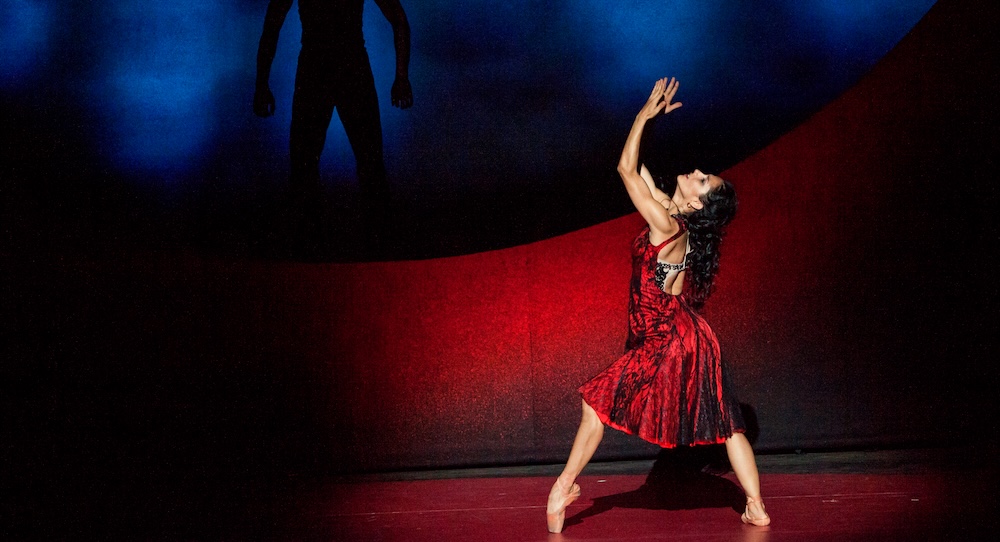
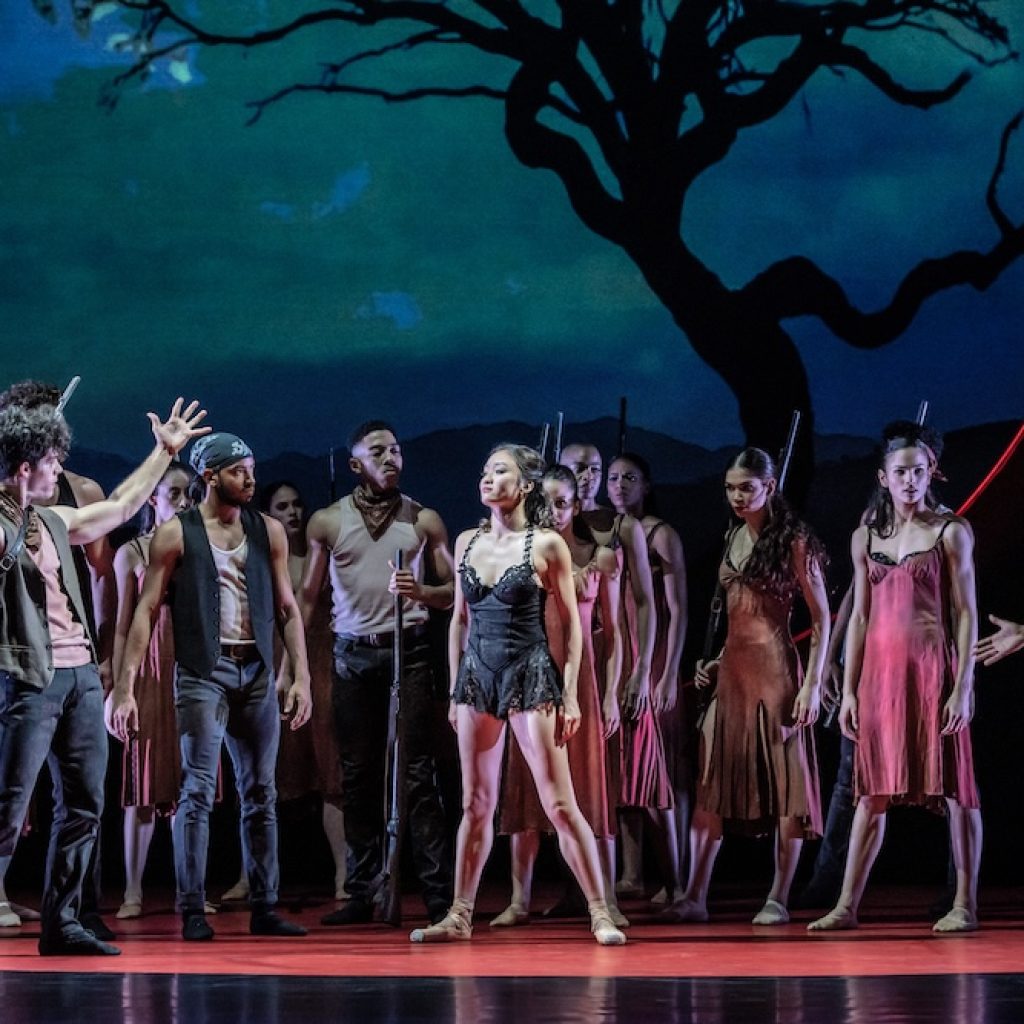
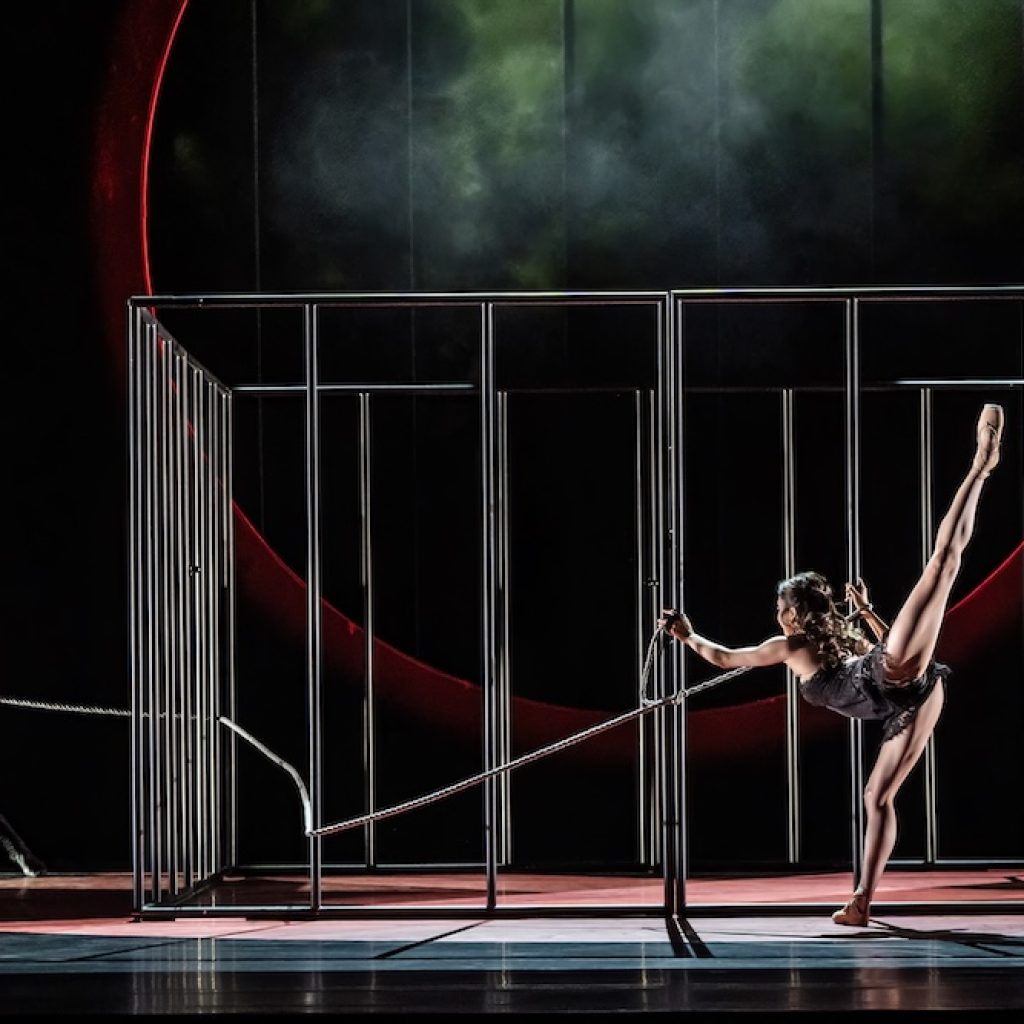
As Carmen was first produced in 2024, there was an existing framework to build on for 2026. The backdrop had previously been a still frame. Acosta wanted to add more emotional weight this time, and so Dunn describes looking at the previous use of colour and blending new ideas in. She verbally paints a wonderfully descriptive canvas of clouds that will depict mood and emotion. Projected moving clouds – like musical choreography themselves – adding depth by applying haze in front of them, as well as a colour wash, for example, a blood red, which will surround the silhouette of the Bull. A very strong colour palette is used for Carmen which includes deep blues and reds – an electric combination, which also moves through the costuming where there is a lot of black and red too.
“Projection changes the space really quickly,” Dunn expands. “From friendly, to more stormy. The clouds are also used to portray inner turmoil.” We can also look forward to a Tavern scene, where the colour palette is more ‘tobacco’ and there are barrels and more haze in this stripped back minimalist set.
When talking about how she draws her ideas together initially, Dunn describes vulnerability in opening ideas in front of others for the first time. In building her content, she explains how she keeps it flexible, so that when in the theatre with other creatives, the making and adapting can amalgamate fluidly.
“That time in isolation is important to think, but I like being in the room with the creative team,” she says, adding that she likes to be in rehearsal as much as possible when working on a project, to track the details. Dunn will be in the theatre for Carmen’s technical rehearsals and will leave on press night, handing over to touring engineers.
Heidy Nύñez, a dancer with Acosta Danza, is excitedly looking forward to her first tour. She describes the ballet as being full of powerful, contagious energy, with music that makes her feel energetic and joyful. She’s going to be on stage a lot throughout the production, as she is playing a gypsy, one of the bandits, and one of Carmen’s friends.
“My favourite part of the production is the opening of Act II,” says Nύñez. “We climb on tables and dance a Spanish and Cuban-styled dance. It’s very joyful!”
Frank Isaac, who will be playing Don José as well as the Bull in silhouette, also talks of joy. “The music possesses our bodies and emotions,” he says, noting that there are wild emotional scenes and sexual depictions.
“One of the hardest scenes is the bandit scene,” says Isaac. “There is so much happening on stage.” Nύñez agrees, saying, “We dance with chairs, rifles, we climb on them; it’s very complicated. You’ve got to be very aware of everything going on around you.”
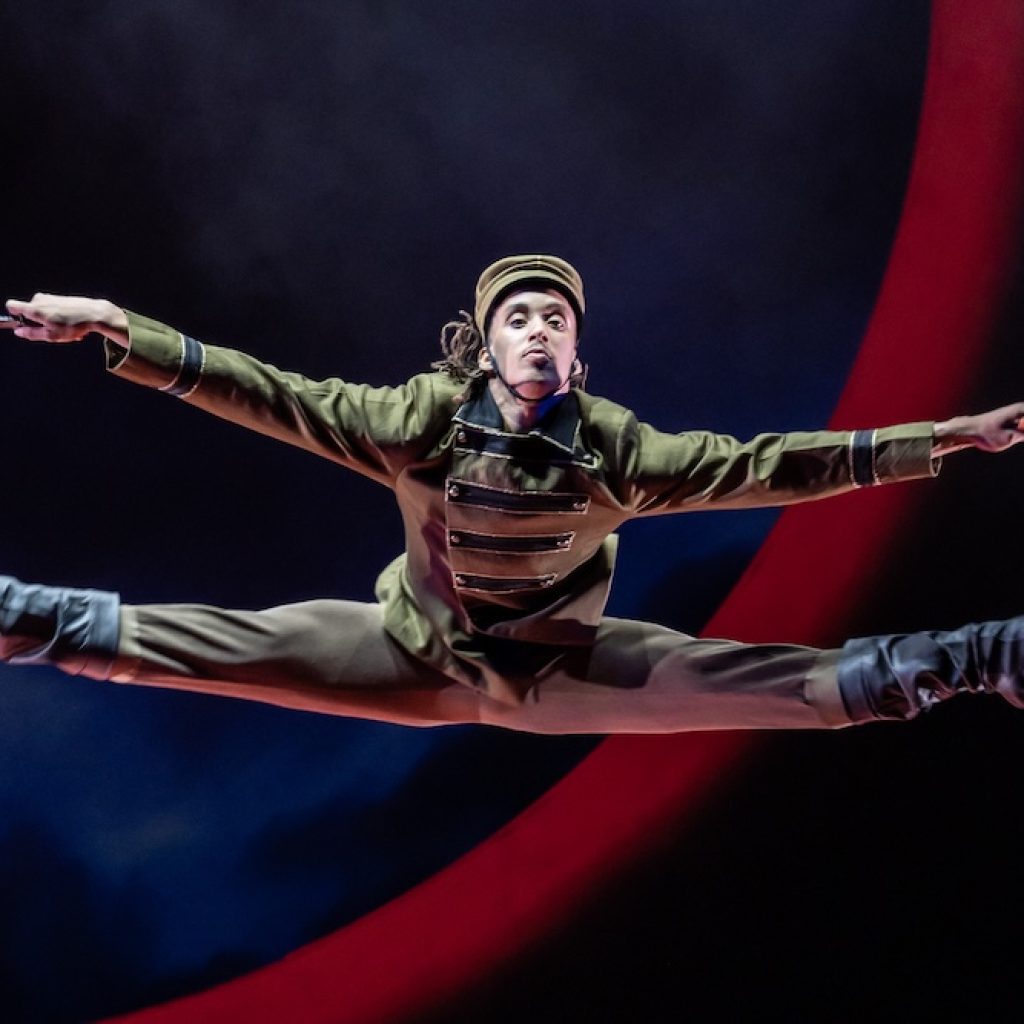
Coming towards the end of the rehearsal process at the time of our talk, Nύñez and Isaac have not yet seen their costumes but are very keen to, as the costumes, although sometimes challenging to get used to, will help them embody and become their characters. The two dancers offer insightful detail on casting. “We are versatile dancers,” says Isaac. “We are not always in the same role each night.” Nύñez confirms, “We have different casts. And different dancers in the role of Carmen. They each play it differently; you can feel different emotions.”
And inevitably, that must impact onstage dynamics and reactions from other dancers in other roles. Which will only serve to keep the production fresh and exciting as it moves through its UK tour.
“My favourite scene is the final one, where Don José takes Carmen’s life,” reveals Isaac. “It’s really dramatic. I enjoy that so much. I can’t stop crying, it’s so emotional!”
It sounds as though Carmen will be one passionate ballet not to miss.
Carmen will open at Richmond Theatre (8-11 April) before touring to Aylesbury Waterside (15-18 Apr), Grand Opera House, Manchester (22-25 Apr), Brighton Theatre Royal (29 Apr-2 May), and finally New Victoria Theatre, Woking (6-9 May).
By Louise Ryrie of Dance Informa.