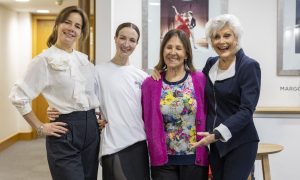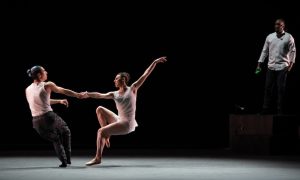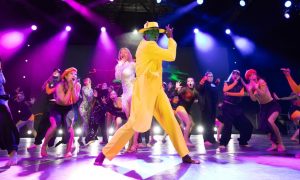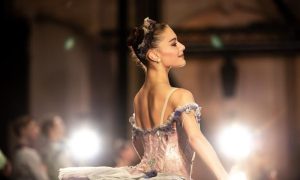
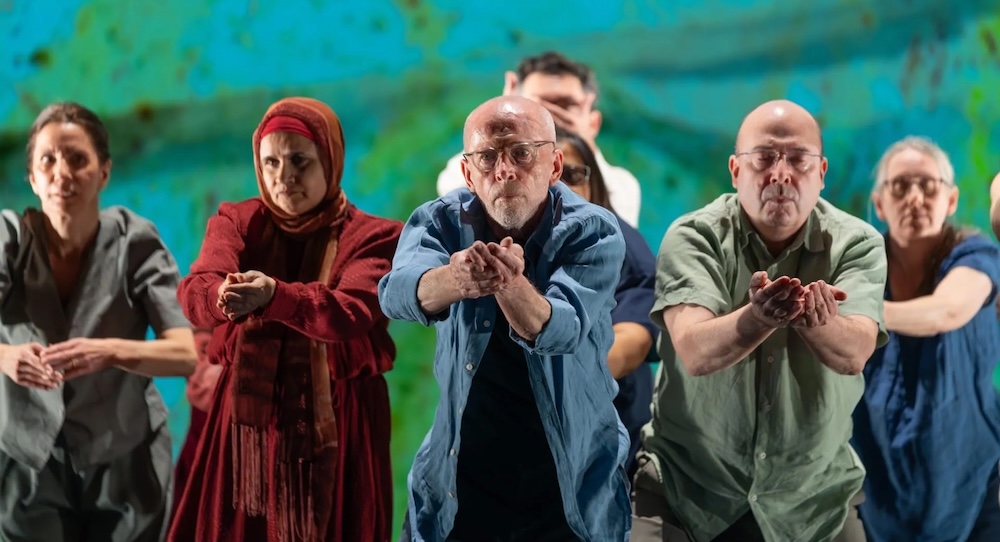
At the launch of the Let’s Dance campaign in March of this year, a special group of dancers performed. These dancers had not come to dance in the usual ways, but instead found their love of movement through a debilitating disease.
English National Ballet (ENB)’s Parkinson’s Company is a triumph of a programme that has spent 15 years engaging with the disease and welcoming people with lived experience of Parkinson’s to explore dance through ENB repertoire.
Dance and disease: A frontier in creative health
As we continue our coverage of Let’s Dance this month, we examine the growing relationship between dance and disease.
A key goal of the initiative is to shine a spotlight on the many practitioners using dance as a mechanism to counter the effects of disease. As we discussed in our last Let’s Dance column, dance for overall fitness has its place in disease prevention, but once diagnosed with a condition like dementia, Parkinson’s or cancer, dance can play a significant role in supporting mental and physical management of the disease.
People Dancing, the foundation for community dance, has many members working with people diagnosed with disease. “Our job is to work with our network of artists and organisations to help them to be better at what they do, expand and reach out to reach new audiences, maintain the audience that they’ve got already and be more inclusive in their practises,” says Chief Executive Chris Stenton. The organisation is a key partner for Let’s Dance and offers support and professional development for community dance practitioners across a range of specialist areas.
“We have recently launched a dance health and well-being network for practitioners open to members,” Stenton reflects, noting that anyone can join People Dancing and that many dance careers include some level of community practice at some stage.
“4.3 million people (in the UK) each week participate in some kind of regular dance activity, around seven percent of the population,” he says, sharing that the organisation is currently working on three or four major dance development projects in support of that number: dance for Parkinson’s, dance for early years and inclusive class as well as dance for disabled people.
People Dancing is well-positioned, using its 7,000-strong membership to amplify the Let’s Dance campaign and galvanise practitioners and organisations in a quest to get the nation moving.
One such member organisation is ENB, whose work with Dance for Parkinson’s Disease is well documented and supported by extensive research.
Research has been embedded since the beginning, Fleur Derbyshire-Fox, Engagement Director for ENB says. “If I was going to start a dance health programme (we call it creative health in the UK now), then it had to be underpinned,” she says, noting that ENB has been involved in multiple research projects exploring both health outcomes and engagement. “When I instigated the programme, we also created a collaboration with the University of Roehampton and Professor Sara Houston, who has led short 12-week and longitudinal studies.” Houston’s ground-breaking research was published in 2015: English National Ballet, Dance for Parkinson’s: An Investigative Study 2.
Houston’s conclusions in the 2015 report are considerable. She finds that the ENB programme may offer multiple physical and psychological benefits, including improved postural stability, fluency of movement, body awareness, motivation, and quality of life, while also promoting a sense of freedom beyond the disease.
When social isolation is a factor for a condition that often includes depression and anxiety among a myriad of symptoms, the chance to convene weekly and release both mental and physical tension cannot be underestimated.
Derbyshire-Fox was inspired to develop the programme after visiting Mark Morris Dance Group, whose foundational work with people living with Parkinson’s in Brooklyn, New York, was the subject of an insight session hosted by ENB in 2009. “At English National Ballet, it was important that we could shine a light on this programme, challenging perceptions of living with Parkinson’s. There’s a whole load of artistic and cultural life and expression that you can take part in and you can create a community.” That is exactly what Derbyshire-Fox and ENB have done.
Creating a scalable model, the Company has expanded its reach through partnerships with hubs including Oxford City Council and MuMo Creative, Dance East, National Dance Company of Wales and Liverpool Hope University. Their own West London program was later divested to a partnership with the Royal Albert Hall, when the Company moved its headquarters to East London. During Covid, like many others, they shifted to online classes, which remain a key component of their Dance for Parkinson’s delivery today.
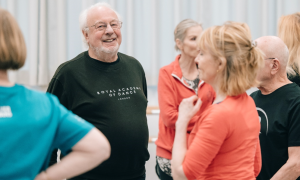
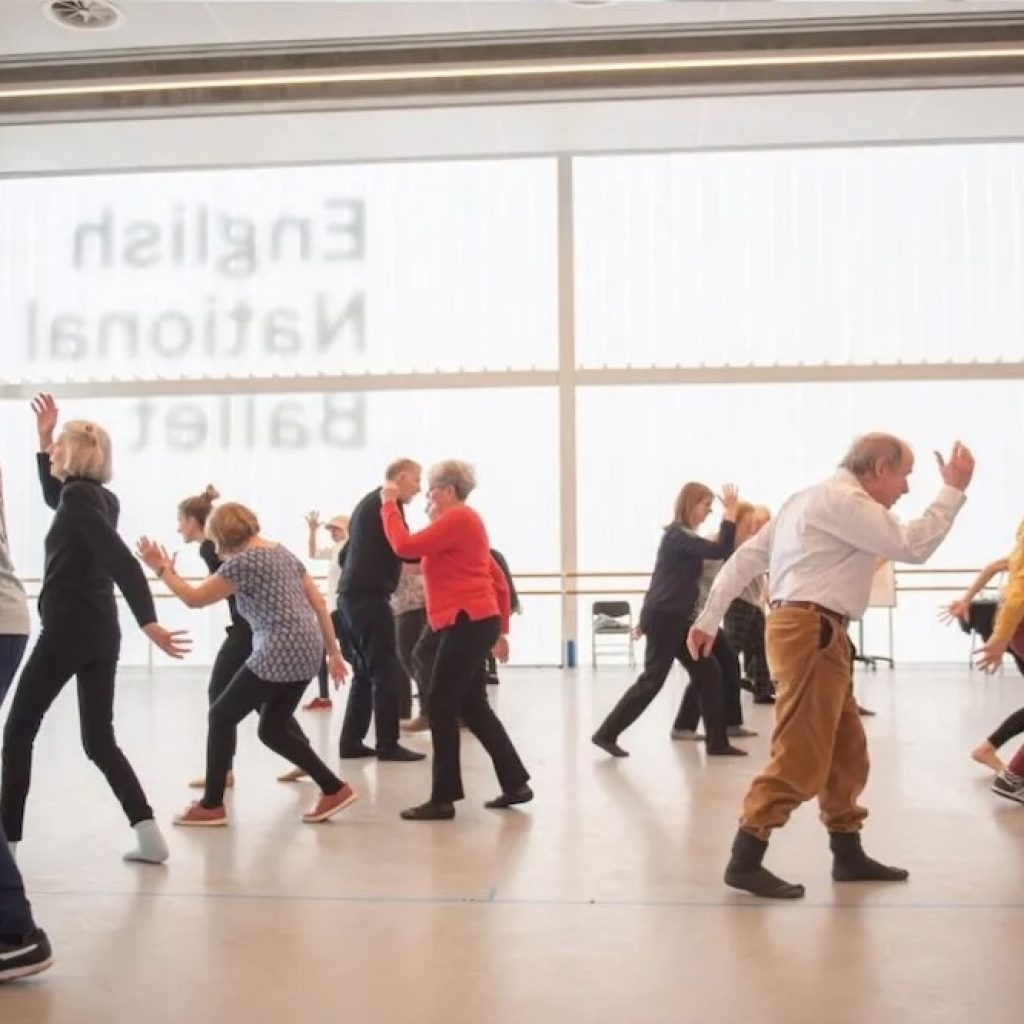
So, what do these class look like? Well, in an ingenious way, they reflect the current ENB repertoire, and it’s not just a case of coming in and moving; dancers are exploring the themes and choreography related to current on-stage works for the leading national company. Social trips to see ENB performances and post-class coffees – often with a company artist dropping by – reinforce a sense of belonging. This engagement package reminds people living with Parkinson’s that they remain part of a broad dance community, where cultural connection and expression are still part of daily life despite a challenging disease.
The most recent research project that ENB’s Dance for Parkinson’s programme is involved in is with Kings College London and UCL in the world’s largest study into the impact and scalability of arts interventions on physical and mental health. Shaper will see the programme trialled among larger groups of people within NHS hospitals and health centres alongside arts interventions led by Breathe Arts and Stroke Odysseys, funded by the Wellcome Trust. It has challenged ENB to adapt.
“When we run our usual classes, it’s people at all stages of Parkinson’s,” Derbyshire-Fox explains. “They might be newly diagnosed, they might have been living with it for 10 years, they might be more mobile, they might need to be seated throughout the class. But for the Shaper study, people with lived experience of Parkinson’s were defined in three groups: mild symptoms, medium, and then the more advanced symptoms.” This has led to a rethink of the content and work artists were able to do in class, but it also presented an opportunity. “At the end of every 12 weeks, there would be a sharing in our production studio with an invited audience of family and friends. We would sign post those people to our regular classes.”
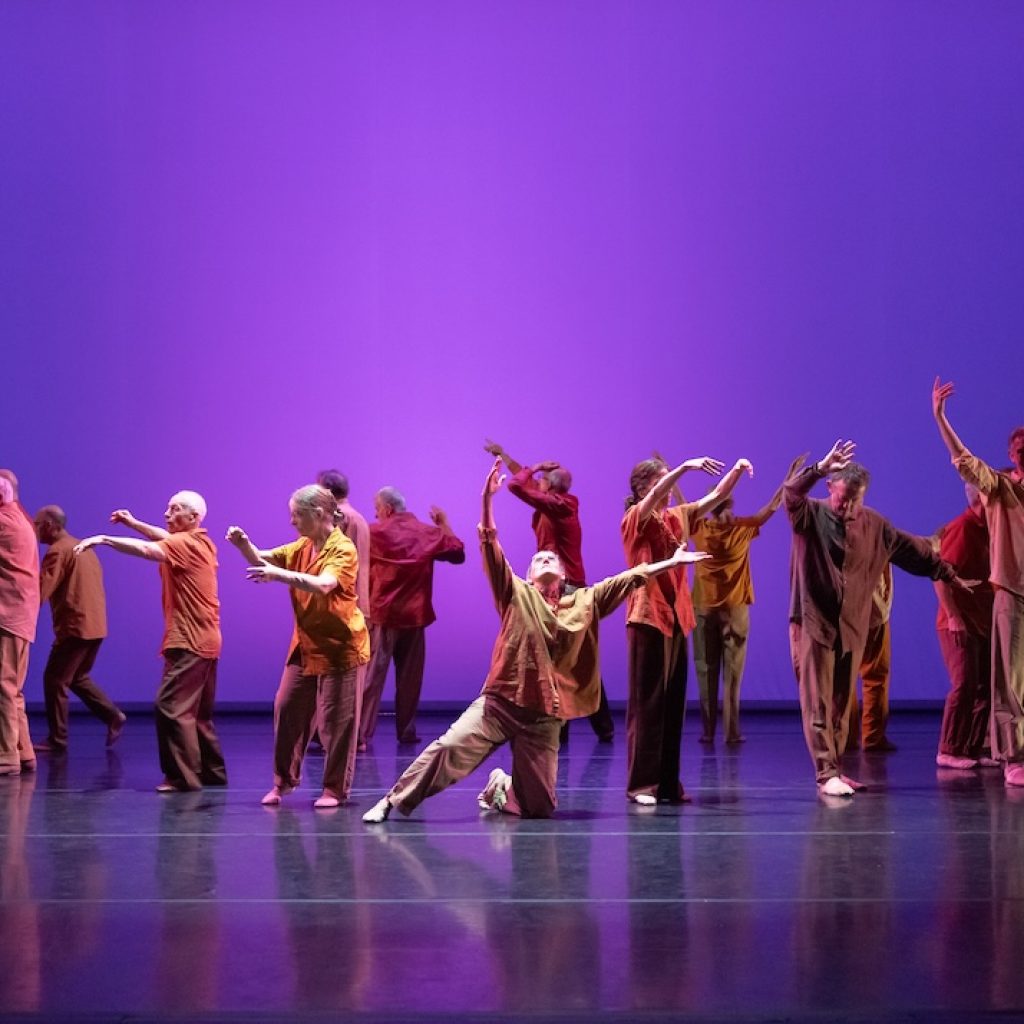
It is from one of the more mobile groups that the ENB Parkinson’s Performance Company was seeded. Hungry for more opportunities to express themselves on stage, the same dancers sought to inspire others newly diagnosed or living with the disease through their performance at the Let’s Dance launch. “They’ve had Ariel Smith, who’s an Olivier Award-winning choreographer, create a work with them. And one that was created by one of our artistic team that was really beautiful,” Derbyshire-Fox says proudly. “It started off with six to eight core members and now we’ve got 16, and we’re going to be running a waiting list.”
“We know through our research that lots of older adults who find their way to dance in later life do so often because a doctor will say you need to do more exercise and they don’t want to go to a gym,” says Stenton, reinforcing the value of finding enjoyment and kinship though movement. “What keeps them going is the sense of community, the creativity, the artistry. The dancing becomes a way in, but then actually, what retains you in that space is different. That’s why creative health is really important. I think that’s ultimately how you can embed dance and dancing meaningfully in society.”
But with doctors encouraged to prescribe dance and the concept of ‘care’ key in this development, Let’s Dance’s goal of making dance a key part of the NHS’ 10-year health plan requires the support of the dance industry, too. “I remember it was the first day of one of these 12 weeks as part of the King’s Shaper research study,” says Derbyshire-Fox. “Peter had come in and was sitting at a table before we were going to go into the studio, and I got the feeling, they’re about to get up and go. So, I made a beeline and had a chat. I said, ‘Just give it a go, see what you think. No one’s judging. We want you to have a really lovely time.’ Anyway, Peter, is now in the performance company. He’s amazing!”
The value of an encouraging word, a program like Dance for Parkinson’s, and a creative and physical outlet can be transformative. Dance is a superpower in the fight against disease. As you plan for 2026, consider how you might support Let’s Dance and its mission to ensure more people are able to connect with dance in your community.
Find out what else has been happening with the Let’s Dance campaign in recent months as we catch up with Founder Angela Rippon for her update. And mark the next National Let’s Dance Day (March 8, 2026), in your calendar. Head to www.lets-dance.org.uk for more information.