
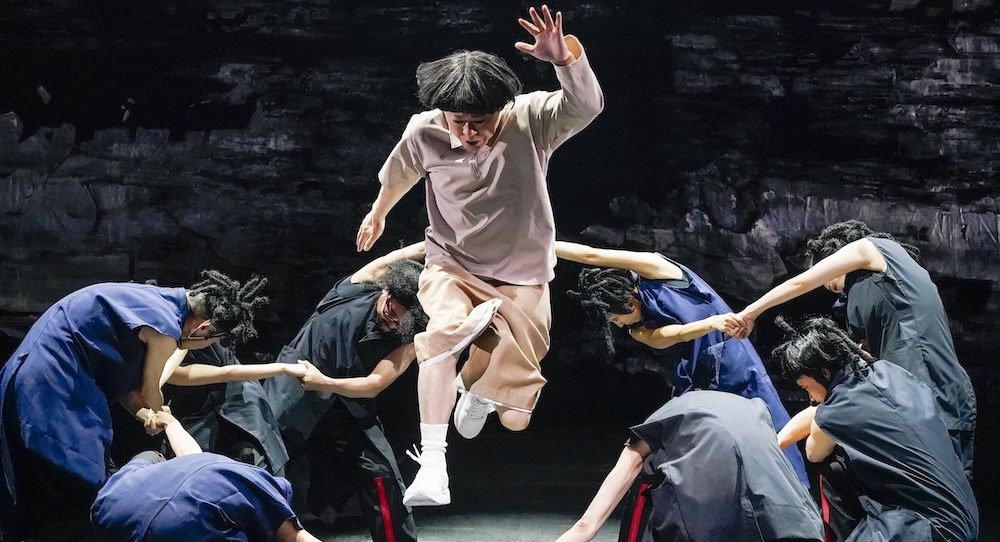
Jumping through time on a palaeontology dig; a Japanese drama, dance and musical spectacle, asks what ‘life’ is when science encroaches on the divine.
−320°F is created and directed by Hideki Noda, an OBE in the UK and recipient of the Purple Ribbon Medal of Honor and the Order of Cultural Merit in Japan. The new show opened in Tokyo in April 2026, before heading to Sadler’s Wells in London on 2 July, with further performances scheduled in Kitakyushu and Osaka.
How have Japanese audiences received the production?
“I think it left them with great mental takeaways, sparking conversations after the show like, ‘Oh, so that’s what that meant!’ or ‘Look how those two elements connected!’” says −320°F choreographer Shigehiro Ide. “Since you can’t hit rewind like you would with a video, the audience has to rewind the scenes in their own minds, which almost feels like a mental workout. Yet, despite all that analytical thinking, they find themselves deeply moved in the end. It truly offers a mysterious, immersive experience.”
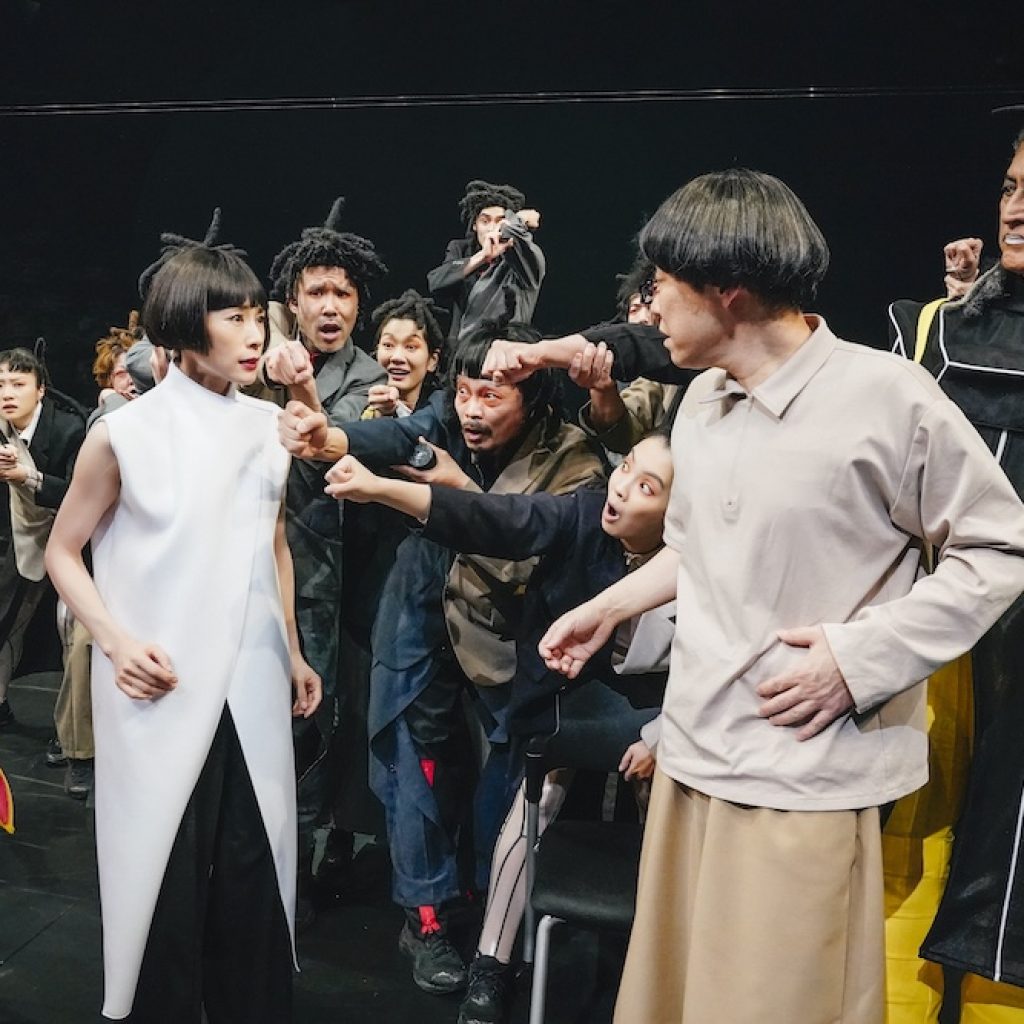
With a running time of 2 hours 20 minutes and no interval, it sounds as though −320°F by NODA MAP – which was founded in 1994, promises to be an intense experience.
Hideki Noda, the creator of over 40 shows, including this production about the meaning of life and mortality, has just turned 70 and will also be performing in −320°F. His shows are large in scale and ambition, and this latest, perhaps unusually, is a science-fiction story that asks ‘what is life’ when science and desire for betterment encroaches on God’s creation.
“When I went to London to study the theatre more than thirty years ago, I was involved in a lot of physical theatre workshops, especially Theatre de Complicite‘s workshop where I met a great director, Simon McBurney and quite a number of actors, including genius Kathryn Hunter whom I have worked a lot since then,” said Noda, offering some historical background to his individual style, plus insight into the creation of −320°F. “The actor’s bodies give the inspirations directly to my play,” he continued. “When I am writing a new play, there are quite a number of problems piled up on the desk. Sometimes just going to the rehearsal room and seeing actor’s physical performance can easily solve them.”
Hideki Noda described his style of storytelling over the past 50 years as using “laughter,” “physicality,” and “poetry” to tell explosively energetic narratives. “To live with the dilemma of science technology is a theme of this play,” he reveals. “After the audiences leave the theatre, I hope they start to think of an unanswerable question. It’s up to their individual experience in their life.”
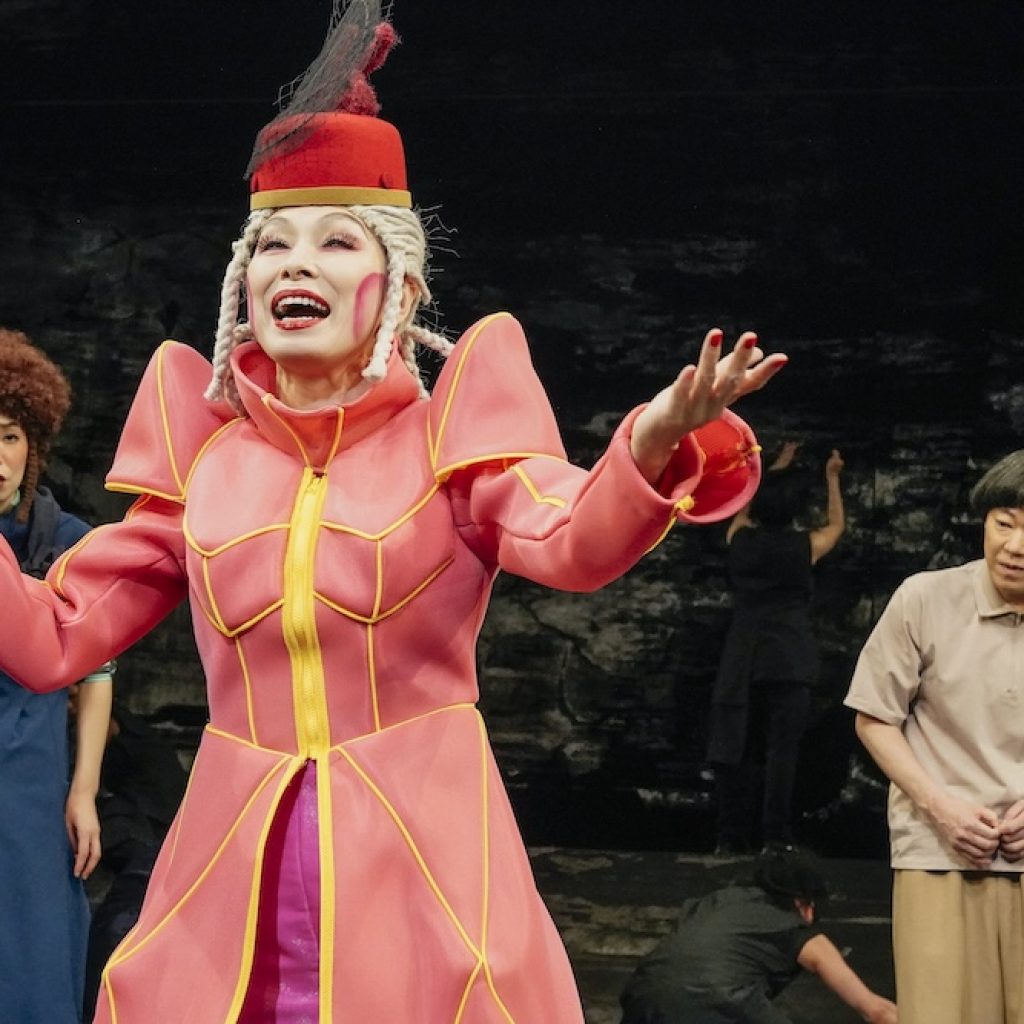
At an excavation led by a biotechnology professor, her assistant – who has defied a 15-year life expectancy thanks to modern medicine, wants to repay the favour – and searches for the mythical “Angel’s Bone”, which their pharmaceutical corporate sponsor thinks might be the key to youth and longevity.
But when their focus turns to the assistant, they think that the vibrating bone in his right arm might be the key to tracing the Angel’s Bone, and it opens a door to his genetic memory, taking them back and forth through time. From the modern world to the Middle Ages and an ancient era. −320°F is a battle of ideas following the Faustian theme of whether desire for more, is a creative or destructive force, and whether science’s goals to enhance humanity will end up damning it. A Faustian descent through myth, memory and other bad ideas.
“I feel we are in a world where we’re re-confronted by some things human beings ought to have solved before.,” says Noda poignantly. “We have more simplistic technologies. I think the Professor in −320°F represents a kind of science technology dilemma. Like in the field of medicine, there are things that could be improved to save people, but at the same time, there are also things we shouldn’t touch. To live with the dilemma of science technology is a theme of this play.”
What were Shigehiro Ide’s inspirations when he began to choreograph for −320°F?
“It all began with a single question,” Ide begins to explain. “If I were to translate what we want to convey into movement rather than words, would it look something like this? If the choreography is too literal, it becomes overly explanatory and loses its spark. I figured that if things are just a little bit ‘off’ or abstract, it allows the audience the freedom to imagine and interpret it in their own way, so I intentionally kept the choreography simple rather than making it literal.”
Ide describes how he put his own vision on the back burner to begin with and instead held workshops to brainstorm with the performers and see what kind of movements they’d come up with. “From there, I started layering my own ideas on top bit by bit,” he says. “The final picture turned out way better than I ever imagined. It totally blew me away, and that energy kept sparking even more new ideas that I just kept adding to the mix.”
Furthermore, Ide describes how the music and the movement were created. “We were fortunate to work in an environment where we could freely bounce ideas off one another. For instance, there were times when the movement was choreographed first and the music was composed around it, and other times it was the exact opposite. The composer would join us right from the rehearsal stage, watching the movements, and we would continuously dialogue and shape the piece together.”
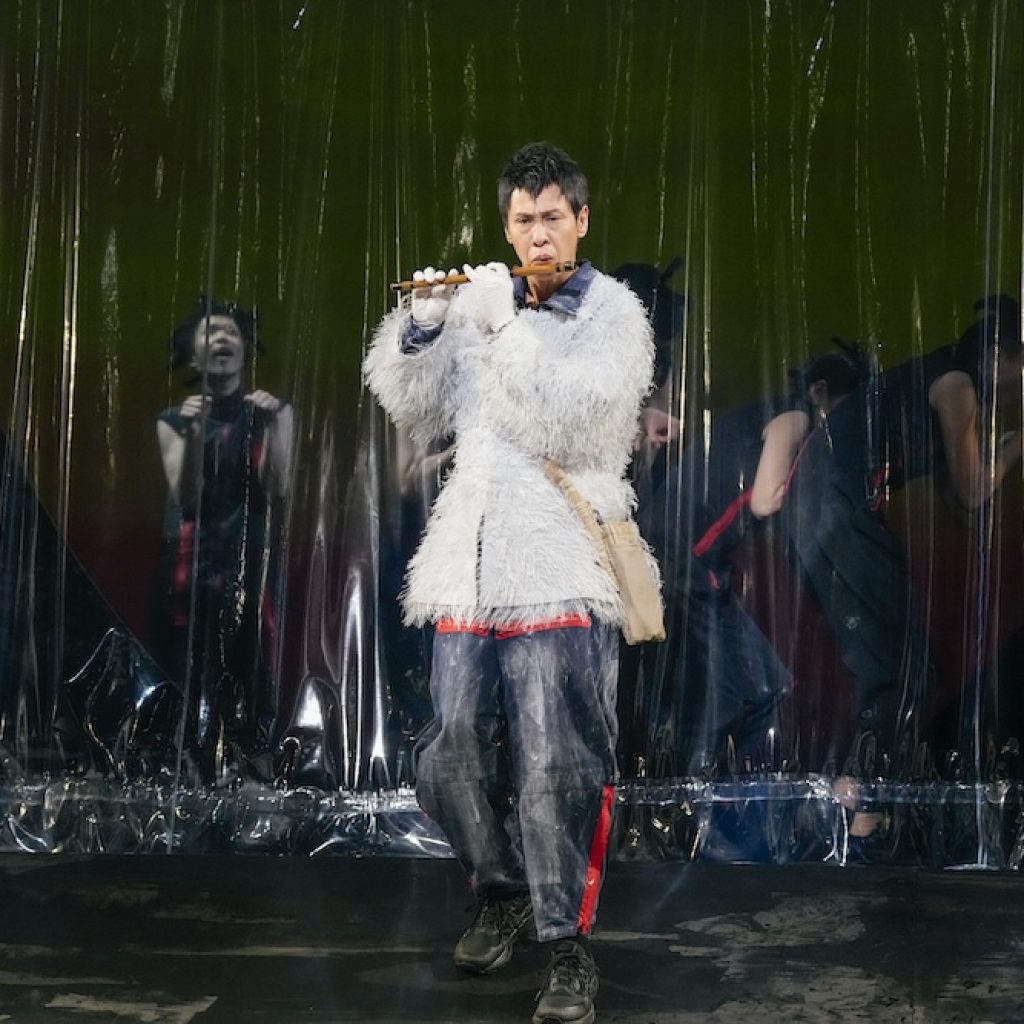
What was his favourite part to choreograph?
“I especially loved working on the movements and gestures of a certain animal,” Ide says, giving an intriguing insight to the upcoming production. “Many of the performers in that scene aren’t professional dancers; they are actors, which means they bring these incredibly rich, expressive facial features to the role. It really made me rediscover that physical expression isn’t just about the body.”
And what does Ide anticipate that UK audiences will like, if coming to watch −320°F?
“The story itself is compelling, of course, but it’s really the whole production — the stage design, costumes, and music. It all feels broadly Asian, yet slightly different. You might think, ‘Is it Japanese?’ but it’s not quite that either. It defies categorization, and trying to pin down its cultural roots becomes almost besides the point,” Ide explains. “In the end, it’s the kind of experience where you somehow find yourself understanding everything, even without reading the subtitles. I feel the audience will be captivated not just by the magical plot twists but also by the physical elements, such as the animalistic movements.”
−320°F by NODA MAP will be staged at Sadler’s Wells Theatre, London from 2nd – 11th July 2026. For tickets and more information, visit www.sadlerswells.com/whats-on/noda-map-minus-320-fahrenheit.
By Louise Ryrie of Dance Informa.