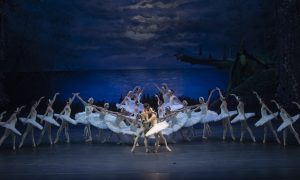
In 2016, I attended English National Ballet’s production of She Said, a triple bill showcasing work by three women choreographers. Then Artistic Director Tamara Rojo explained she had reached the tail-end of her long performing career without ever dancing a piece created by a woman. That moment crystallised a question that has followed me ever since: how can an artform with participation dominated by girls and women still have its artistic leadership almost entirely in the hands of men?
It became the focus of my MA research at Rambert School, during which I gathered data from hundreds of dancers, alongside teachers and major UK ballet companies. The results confirm what many inside ballet have long suspected: gender bias is embedded into training, and it quietly shapes who gets to lead.
A stark imbalance
Cis boys make up just 7% of ballet students under 18 in the UK. The vast majority (92%) are cis girls, with the remaining 1% being trans, non-binary or gender-diverse. Yet in the five largest UK ballet companies, all artistic directors are men, and across four seasons, 83% of works performed were choreographed by men. Even when women were commissioned, their contributions were more likely to appear in shorter mixed bills than as full-length works. This reflects international statistics from the Dance Data Project, whose 2025 Leadership Report showed 70% of Artistic Directors globally are men.
What has often been brushed off as coincidence is in fact a pattern, one that begins in training.
Different standards from day one
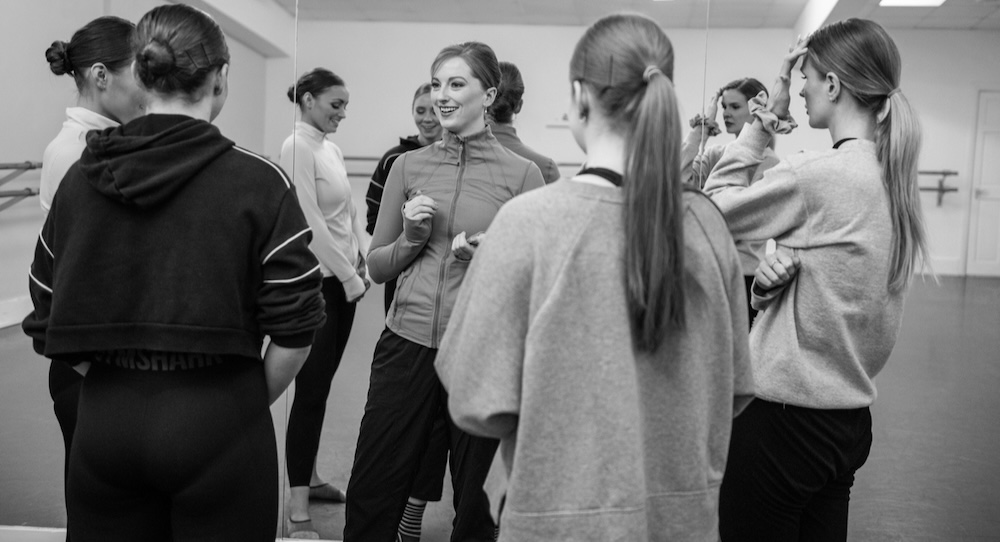
Many dancers recalled a clear divide in how girls or women were treated compared to their male peers. Praise and attention flowed towards the boys, often regardless of ability, while girls were held to stricter standards. One dancer summed it up: if a boy made a joke in class, he was ‘the class clown’; if a girl did the same, she was ‘disrespectful’.
Uniform rules often reflected the same double standard. Girls were expected to be ‘streamlined and slicked back’, every contour visible. Boys could turn up in a variety of outfits without consequence, their comfort prioritised to keep them engaged.
For trans and non-binary dancers, the experience was even more complex. Tight dance clothing, binary casting and gendered vocabulary left many feeling they had to perform an identity that didn’t reflect them authentically. As one non-binary dancer explained, “I leave ballet class feeling like I’ve been acting.”
The pipeline problem
Scarcity magnifies the imbalance. Western stereotypes still mark ballet as ‘for little girls’, so few boys participate. Those who do are treated as precious commodities. Teachers lavish attention on them, and opportunities are often fast-tracked. Meanwhile, girls, surrounded by dozens of equally talented peers, are made to feel replaceable.
This disparity echoes in professional life. Male dancers are often ushered into choreographic or directorial opportunities through informal mentorships and networks. Women, on the other hand, are conditioned from their earliest pliés to be obedient, hesitant to self-promote and ready to serve as a ‘muse’. Helen Pickett, one of ballet’s most prolific choreographers, has observed, “It still seems that dance education teaches women to be pretty and nicely acceptable instead of fostering them into being exceptional and formidable leaders.”

It’s a mismatch of qualities. The boldness and risk-taking expected of leaders are discouraged in girls from the start. By the time careers peak, men are more likely to step into leadership, not because they are more talented, but because they have been more consistently encouraged along a well-trodden path.
Why it matters
This imbalance has artistic consequences. When most ballets are filtered through a male lens, the artform misses out on the full spectrum of voices and perspectives that could shape its future.
Initiatives at professional level have highlighted and supported women choreographers. But these interventions arrive late in the pipeline. By this stage, many dancers who could have been powerful leaders have already been filtered out.
Real change needs to happen earlier, in the studio, where leadership potential is first nurtured or constrained.
What dancers want
The hundreds of dancers I surveyed were clear about what needs to shift. They called for more chances to lead, through warm-ups, choreography tasks or mentoring younger students.
They wanted less hierarchy and more dialogue, where asking questions isn’t seen as disobedience. Conformity might make for tidy corps de ballet lines, but it doesn’t foster independent thinkers who can choreograph, direct or challenge the status quo. A more feminist pedagogical model, one that values shared power and diversity of experience, develops the skills ballet needs in its future leaders.
They also wanted the full ballet vocabulary accessible to everyone, not restricted by a binary model. Splitting vocabulary, skills and qualities into ‘male’ and ‘female’ decides who you are before you’ve had the chance to build a full toolkit of skills or shape your own identity as a dancer.
Above all, they wanted to see leaders at the top who reflect the diversity of those in the studio and wider culture, and who value and respect the individuals they work with.
Towards visible change
Ballet has reinvented itself many times, from the male-dominated courts of Louis XIV to the ballerina-centred Romantic era and beyond. The imbalance we see today is not inevitable. It is simply the latest phase in ballet’s ongoing relationship with gender. It can shift again with intentional effort.
If ballet is to remain relevant, it must ensure that the leaders of tomorrow reflect the dancers and values of today. That means reforming how we teach, how we praise, and how we imagine what artistic leadership looks like.
Reforming training isn’t about lowering standards, but about raising dancers who are not only technically accomplished but also empowered to lead, create and imagine new futures for the artform.
By Anna Morgan of Dance Informa.