

Tattoos aren’t new. Humans have been marking their skin for thousands of years, with copious different cultures using tattoos for different reasons.
But in today’s world, tattoos as a fashion and identity statement are wildly growing in popularity. Body art, adornment and modification are often seen as an extension of self-expression. But what are their place in the dancing world? Should tattoos be covered up or worn with pride? A sensitive and emotive subject, with some different viewpoints to be considered.

Manon Servage is a French Canadian dance artist and creative based in London. “Most of my tattoos are tied to places I’ve visited or meaningful moments in my life,” she says. “They sort of serve as a visual diary, symbols of experiences I carry with me. One special piece is a minimal tattoo of two people hugging. It was done in Abisko, Sweden, and represents the power of love and human connection, which I deeply value.”
Servage sees tattoos as part of a dancer’s identity and artistry, bringing individuality to the body, and has never felt that having tattoos has held them back.
“I’ve never encountered serious issues with my tattoos or piercings as a dancer,” she explains. “They’ve been accepted, and sometimes even appreciated in my work. Choreographers I’ve worked with value authenticity and personal expression; it’s becoming more common in the dancing world to embrace individuality. Unless a piece requires strict historical accuracy, I don’t see a need to cover them. Even then, it’s about visual coherence not erasing expression.”
Our continually evolving world is an interesting and sometimes challenging place to be. Choreographers creating new works on the one hand might be willing and keen to embrace visible tattoos on stage. But others might have different visions for their work and want a more unified or classic aesthetic. Could that get more difficult from here, for choreographers to have an honest voice about how their work will look on stage?
An Imperial Society of Teachers of Dancing (ISTD) teacher, who teaches ages two through 75, says she is aware she probably has an old-fashioned opinion, but feels tattoos in the dancing world should be covered.
“I worry that young people of today will regret their choices in getting so many tattoos. I’m not saying they shouldn’t have them, but they should be carefully considered. People change so much as they grow up. How do they know what they want now is what they will want in 10 years time? Tattoos are not easy to change or get rid of. I think maybe there might be an issue further down the line when this is not a fashionable trend anymore and casting directors do not want dancers to have them.”

Steph Roberts is a dance teacher who chose to wait until she had finished performing until she got tattooed. “Personally, I think tattoos should be worn with pride,” she says. “I have two tattoos; they are part of me, they are beautifully designed, and they mean something to me. Obviously, if tattoos are offensive, they should be covered up for dance and performances, but other than that, why not allow dancers to express themselves with tattoos? Many people get them for sentimental reasons, so why shouldn’t they be allowed to show them off?”
Roberts continues, “I waited to get them because I felt that companies I was auditioning for didn’t want us to have them. I attended an audition with a friend as support. She was asked if she had a tattoo at the audition. She said yes and was asked to leave, even though she was willing to cover it with makeup.”
An entertainment host on a current cruise contract reveals that her contract stated performers were not permitted to get any further tattoos whilst employed by the company. “I’m friends with lots of dancers on the cruise’s show team who have tattoos, and their costumes are fitted for the tattoos that they have. Sometimes they’re allowed them visible and sometimes they are covered; it depends on the vibe of the show, and it depends on the company as well.”
Oliver Starpov is a dancer with the Royal Danish Ballet. He is also a choreographer and makes an interesting point that should companies and choreographers not want tattoos to be visible on their dancers (for example, if they are working on a period piece), then they should take responsibility for covering them, in a similar way to actors on a film set.
“My choreographic work often reflects either real people from today’s society or characters in abstract universes, so I’m rarely bound by a specific time period,” Starpov says. “As a choreographer, I don’t see tattoos as a problem, or something that needs to be covered up. All of my tattoos have a special meaning to me. They represent different works I’ve created through the years. I’m actually falling behind when it comes to getting tattoos, as I’ve done a lot of work without getting new ones. The only reason for this has been the practicality of having to cover them when performing on stage as a dancer. I would probably have a lot more if I wasn’t dancing in a ballet company.”
Starpov stresses the importance of self-expression, and that having tattoos will never keep him from casting a dancer. “Generally, I would love to see more dancers with tattoos on stage. We don’t need to be so frightening anymore.”
Amy Watson is the Artistic Director of the Royal Danish Ballet and admits to having a love-hate relationship with her own tattoo, which she had done spontaneously at the age of 20.
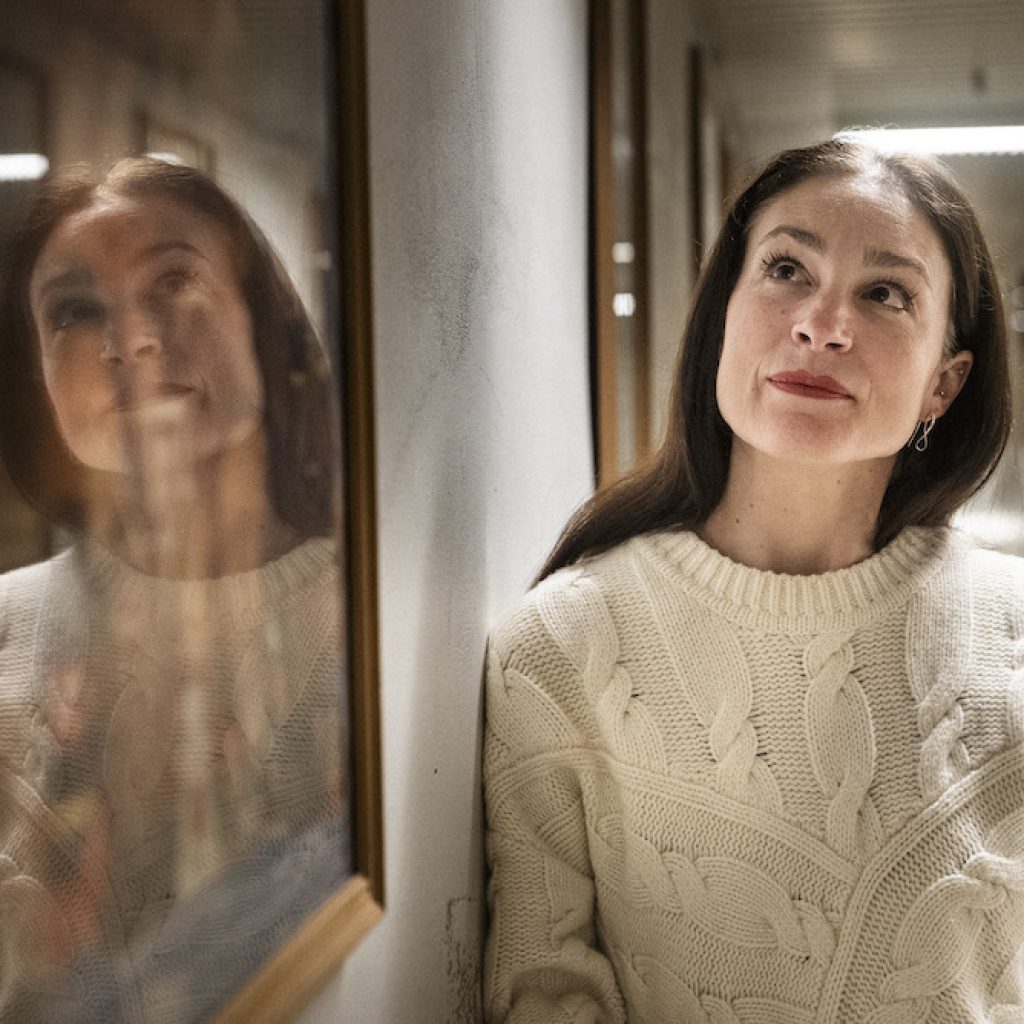
“At the time, I was working incredibly hard, at the beginning of my professional career, and it felt like a quiet act of rebellion,” Watson reflects. “A reminder that this was my body and no one could dictate what I could or couldn’t do with it. A declaration of independence in a world that demanded discipline and conformity. In my generation, ballerinas didn’t have tattoos. It was seen as unladylike, even unprofessional. I chose a place no one would likely see — my lower back — and made it through my entire career without ever needing to cover it. Until one of my final performances, where I danced nearly nude in a new creation and revealed it for the first time on stage. That was a powerful moment.”
Watson reveals she has felt ashamed of her tattoo for not having thought it through, but secretly always loved it at the same time. She explains that whilst artistic identity is deeply personal and the way we choose to express ourselves – whether through movement, presence or appearance – is a reflection of who we are as artists, there are still times when tattoos should be covered.
“Context is everything,” she says. “I was part of Suzanne Farrell’s summer programme at The Kennedy Center, and one evening we saw a play. The next day, Ms Farrell asked us about the leading actress’s hands. She had worn red nail polish – something that was out of place for her character. That detail, though small, had disrupted the authenticity of the portrayal. Another time, I asked a teacher if I might wear red nail polish for a role and was gently asked why I would want to draw attention away from the beautiful line of the arms and hands. Tattoos are no different. If a visible tattoo supports or is neutral to the narrative, then it may not need to be concealed. If it distracts from the storytelling, character or aesthetic lines of the body, it may be appropriate to cover it.”
Dancers, by nature, are expressive beings. Whilst maintaining respect for each situation, the diverse and sensitive perspectives expressed here shine a light on what we’d probably all like to both experience and offer to others as we travel through life: understanding, acceptance and freedom to have an individual voice.
By Louise Ryrie of Dance Informa.